
Stop Email Spoofing Before It Reaches Your Customers
Defend your brand, protect your customers, and cut the risk of phishing attacks by over 92%!
Why DMARC is essential for modern business email security
Every day, cybercriminals send millions of fraudulent emails that appear to come from legitimate businesses. These attacks damage customer trust, put your brand at risk, and can lead to financial and legal consequences.
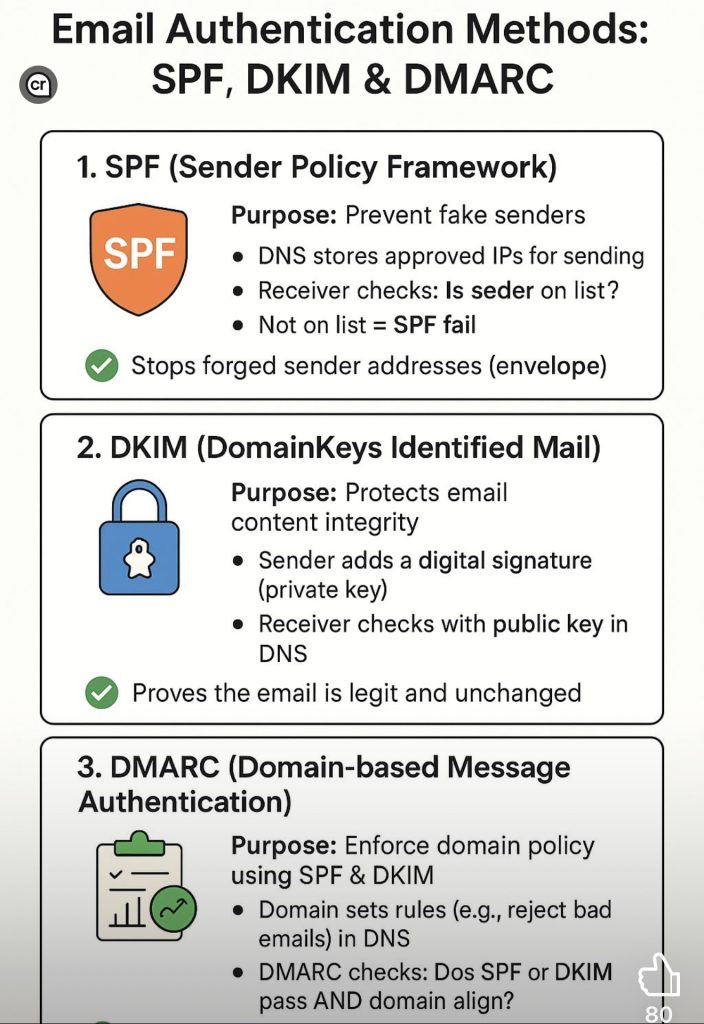
DMARC (Domain-based Message Authentication, Reporting, and Conformance) is the industry standard for stopping these attacks before they reach inboxes. It works by verifying that emails sent from your domain are truly from you, blocking unauthorized senders, and giving you visibility into how your domain is being used.
Why DMARC matters:
Gives you actionable reports on domain activity
Protects your brand reputation
Blocks phishing and spoofing attempts
Increases email deliverability and trust
Gives you actionable reports on domain activity
Limited-Time Offer
For a limited time, get 50% off your DMARC service for the first 4 months when you sign up through this promotion.
Don’t wait until a phishing email damages your reputation. Secure your domain today and give your customers confidence that emails from you are legitimate.
Get Started and Claim 50% Off
Latest Insights & Blog
Expert insights on cybersecurity, compliance, and IT strategy.
-
CISA Flags Exploited Backup Software: Can Your Business Continuity Plan Survive An Attack?
CISA’s October 2026 warning confirms attackers are exploiting vulnerabilities in backup management software. For CEOs, boards, and IT leaders, the bigger concern is business continuity: Could your organization still recover if both its primary systems and backup infrastructure were compromised? Here’s what leadership needs to know.
-
School District Vendor Risk Management: Why Education Needs Better Vendor Oversight
A school district can secure its own network and still face student-data exposure through a third-party vendor. Using California’s ETS breach as a case study, TorchLight examines vendor risk management, student privacy, and four practical questions school boards should be asking, with specific guidance for Washington and California education leaders.
-

When The Audit Ends, What Happens To Credit Union Member Data?
When an audit ends, sensitive member information may remain with the auditor for years. The Mercadien cybersecurity incident highlights why credit union leaders should review data retention, secure deletion, and vendor notification terms as part of existing oversight.
-
Spokane Public Schools Cybersecurity Incident: What We Know So Far
Spokane Public Schools now says it has reason to believe student and staff data was compromised in the September cybersecurity incident. The investigation remains ongoing as specialists work to determine what information was affected and who may need to be notified.
-

The Data Your AI Agent Reads Can Hijack It: What Regulated Organizations Need To Know After SalesBleed
SalesBleed showed how ordinary business data can become instructions to an AI agent with access to sensitive systems. For RIAs, the bigger question is whether leadership understands which AI tools are already operating, what they can access, and what authority they have. Here’s what firms should review now.
-
The Insight Credit Union Ransomware Claim: Credential Exposure for Credit Unions
Storm listed Insight Credit Union as an alleged ransomware victim on September 15, 2026. The claim remains unconfirmed, but reported credential exposure highlights a critical issue for every credit union: containment, NCUA reporting, and member notification can all move on different timelines before a forensic investigation is complete.
-
AI-Powered Business Email Compromise Warning For Regulated Organizations: Evil Tokens 2026
Microsoft disrupted EvilTokens after linking the cybercrime service to more than 12,000 compromised inboxes. It is one of 2026’s clearest warnings about AI-powered business email compromise and how AI can make a stolen mailbox far more useful to attackers targeting regulated organizations.
-
14 Lawsuits, One Unanswered Question: What the TruStage Cyberattack Means for Credit Unions
14 proposed class actions, an unresolved question about member data, and a recovery still underway. Here’s what the TruStage cyberattack means for credit unions navigating NCUA reporting, member communication, vendor oversight, and business continuity.
-
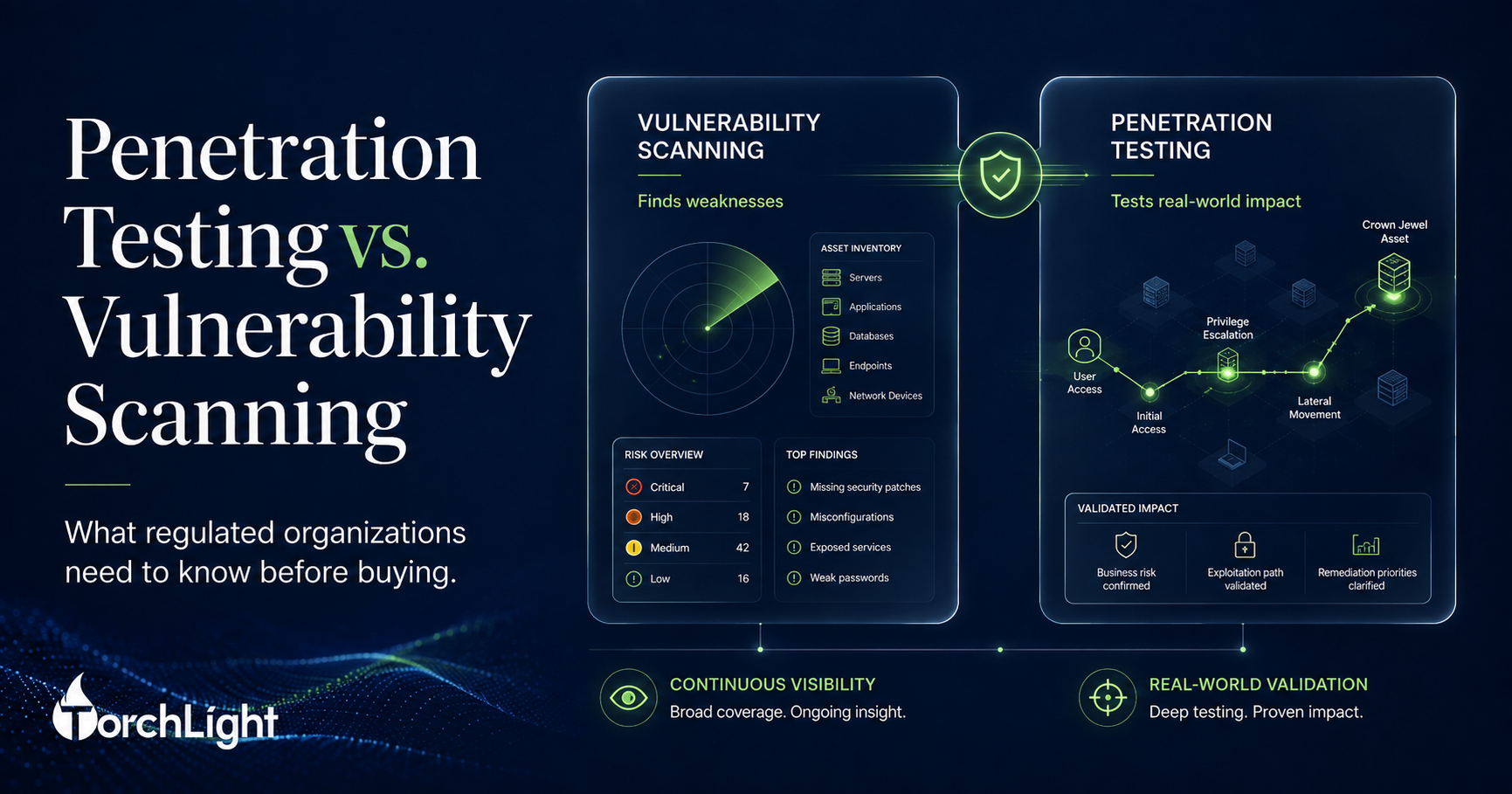
Penetration Testing vs. Vulnerability Scanning
Vulnerability scanning identifies potential weaknesses. Penetration testing shows what an attacker could actually do with them. This executive guide explains the difference, the regulatory requirements, and how to buy the right security testing.
-
RIAs, Wealth Managers & Investment Firms: AI Regulation in 2026
The SEC has not adopted an AI rule, but AI is in its 2026 exam priorities. Know what your firm uses, set boundaries, and keep evidence.