
Manufacturing IT That Keeps Production Moving.
Managed IT and cybersecurity for manufacturers where uptime, intellectual property, engineering systems, secure access, and connected operations all affect whether the line keeps moving.
TorchLight brings support, cybersecurity, recovery, vendor coordination, and accountable technology leadership together around the realities of modern production.

IT, cybersecurity, recovery, vendor coordination, and leadership working as one operation.
Manufacturing Doesn’t Leave Much Room for IT Mistakes.
Production depends on business applications, identities, engineering workstations, suppliers, remote access, plant systems, and increasingly connected operational technology working together every day.
The challenge is that manufacturing environments cannot always patch, reboot, replace, or isolate technology on an IT department’s preferred schedule. Production windows, equipment dependencies, legacy systems, OEM requirements, and vendor access all change how the environment has to be managed.
The environment still has to be supported, secured, monitored, recovered, and owned without treating the plant floor like an ordinary office network.
The line has to stay available.
Maintenance, updates, security changes, and incident response have to respect shift schedules, planned outages, production commitments, and the systems the business cannot casually interrupt.
Not everything can simply be patched.
Legacy Windows, PLC, HMI, SCADA, historian, and specialized production systems can have limited maintenance windows and operational dependencies that require more deliberate security controls.
Vendors still need a controlled way in.
OEMs, integrators, software providers, suppliers, and remote support teams may all need access. Identity, segmentation, permissions, approvals, and logging have to make that access useful without leaving it unmanaged.
Someone has to own the whole environment.
When business IT, plant systems, vendors, cybersecurity, recovery, and compliance overlap, responsibility cannot disappear between teams. Someone has to know what happens next and carry it through.
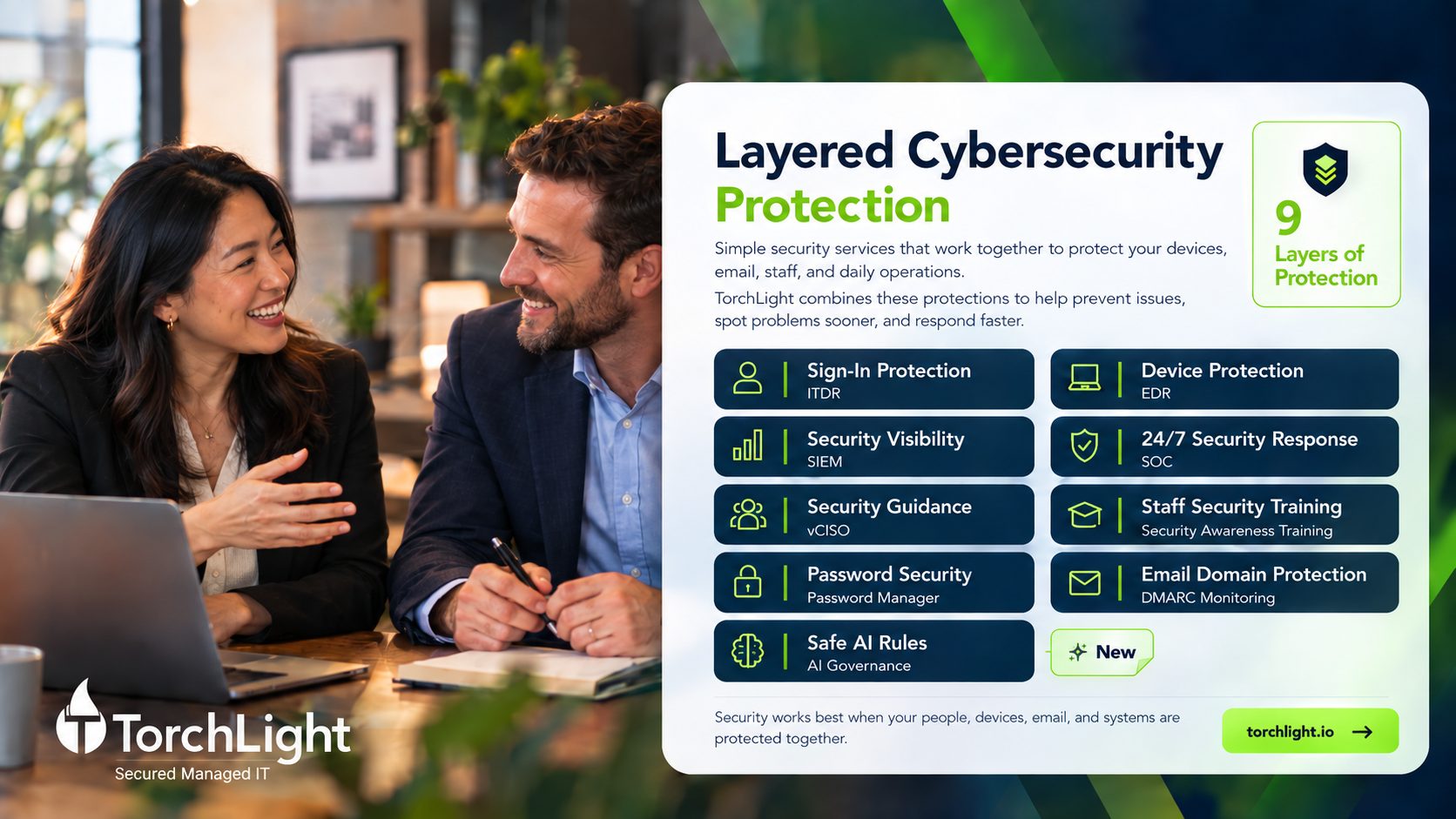
Manufacturing Compliance Is an Operating Discipline.
Manufacturing cybersecurity compliance rarely belongs to one department. Customer requirements, contracts, cyber insurance, supply-chain expectations, internal policies, and standards such as NIST SP 800-171, CMMC, or ISO 27001 can all influence how technology and security need to operate.
Where those requirements apply, evidence has to come from the real environment. TorchLight’s cybersecurity audit, assessment, and compliance services help manufacturers evaluate controls, identify gaps, organize evidence, and turn findings into remediation work that can actually be tracked.
All of this is solidified when assessment is connected to daily operations. Identity, endpoint protection, vulnerability management, monitoring, incident response, and documentation can be supported through managed security services instead of becoming a separate project every time a customer, auditor, insurer, or leadership team asks for proof.
Our objective is to build an environment where controls, evidence, ownership, remediation, and recovery can stand up to scrutiny.
CMMC & NIST SP 800-171
Where defense contracts or customer requirements bring these standards into scope, security controls, documentation, evidence, assessments, and remediation need to operate as one defensible program.
ISO 27001 & Customer Requirements
Manufacturers increasingly have to demonstrate how information, systems, suppliers, access, risk, and corrective action are managed to customers and other stakeholders throughout the supply chain.
Identity & Access
MFA, least privilege, privileged administration, user lifecycle controls, remote access, and vendor permissions need clear ownership across both business IT and the people supporting production systems.
Risk, Evidence & Remediation
Risk assessments, control evidence, security plans, findings, corrective actions, and remediation ownership should stay current enough to answer scrutiny without rebuilding the compliance story from scratch.
Vendors & Operational Dependencies
MES and ERP providers, OEMs, integrators, remote support partners, cloud platforms, and other third parties create dependencies that have to be understood, controlled, documented, and reviewed.
Incident & Recovery Readiness
Security incidents, ransomware, system failures, and production disruptions need defined response ownership, tested backups, usable recovery plans, coordinated escalation, and documentation leadership can rely on afterward.

Security Has to Respect Production.
Manufacturing cybersecurity cannot assume every device can be rebooted, every system can be patched immediately, or every connection can be treated like a standard office endpoint.
Protection has to account for production schedules, engineering systems, remote vendors, legacy dependencies, recovery priorities, and the business impact of taking the wrong system offline at the wrong time.
Detect Threats Before They Become Downtime.
Continuous security monitoring across endpoints, identities, email, and security telemetry helps suspicious activity get validated and escalated before it quietly becomes a larger operational event.
Explore Managed SecurityPatch Around Operations, Not Through Them.
Vulnerability management, patching, configuration changes, and maintenance need clear prioritization and planned windows so manufacturers can reduce exposure without creating unnecessary production disruption.
Explore Managed ITControl the Paths Into Production.
Identity controls, network segmentation, remote-access policies, privileged permissions, and vendor oversight help reduce unnecessary pathways between business IT, engineering resources, and operational systems.
Explore Co-Managed IT & SecurityTest the Environment Before an Attacker Does.
Vulnerability assessment and penetration testing help manufacturers validate exploitable weaknesses, prioritize remediation, and understand how exposed systems, identities, applications, and network paths could be used in a real attack.
Explore Penetration TestingRecovery Has to Be Planned Around Production.
Manufacturing businesses can’t afford to hault production for extended periods of time because they didn’t backup the right systems. You need to be able to restore the right systems, in the right order, in a timeframe in which operations can actually tolerate. For manufacturers, that recovery sequence may span Microsoft 365, file services, ERP, MES, engineering data, identity systems, servers, vendor dependencies, etc., and the workflows connecting them.
TorchLight’s managed IT services include verified backups, disaster-recovery readiness, proactive infrastructure management, and continuity planning so recovery is treated as an operating capability rather than an assumption.
When aging infrastructure, plant expansion, acquisitions, migrations, or modernization create larger dependencies, professional IT services and vCISO and vCIO leadership can connect the technical project to business continuity, security risk, budget, and the longer-term manufacturing technology roadmap.



Identity first, then Core infrastructure. Restore business-critical applications and production dependencies in the sequence your operation actually needs them.
Manufacturing Intelligence.
Practical analysis for manufacturing leaders responsible for cybersecurity, vulnerability management, CMMC and NIST requirements, security testing, production uptime, and the technology decisions behind resilient operations.
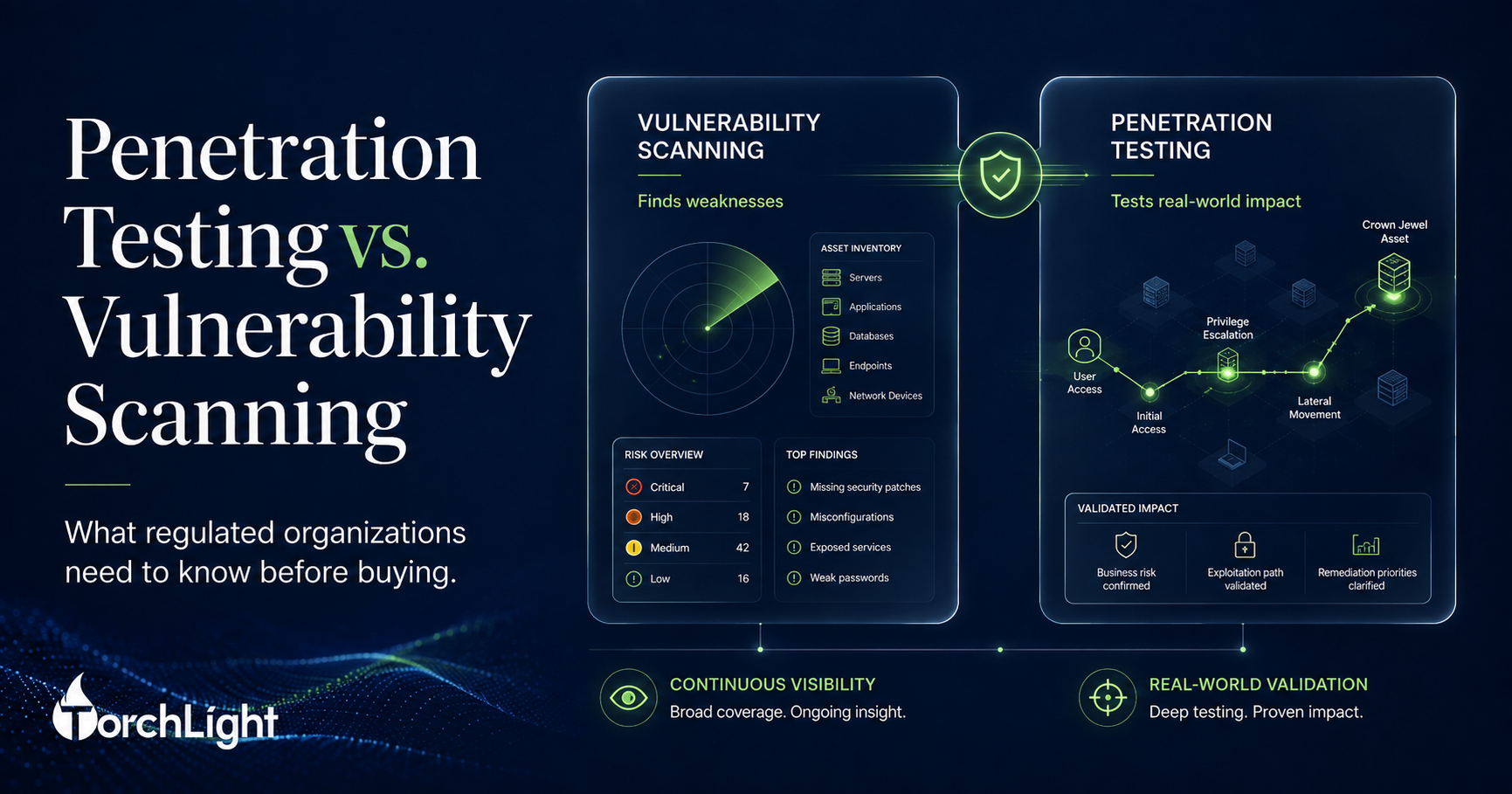
Penetration Testing vs. Vulnerability Scanning
Vulnerability scanning identifies where weaknesses may exist. Penetration testing validates what an attacker could actually do with them. Understand where each belongs in a manufacturing cybersecurity program.
Read the Analysis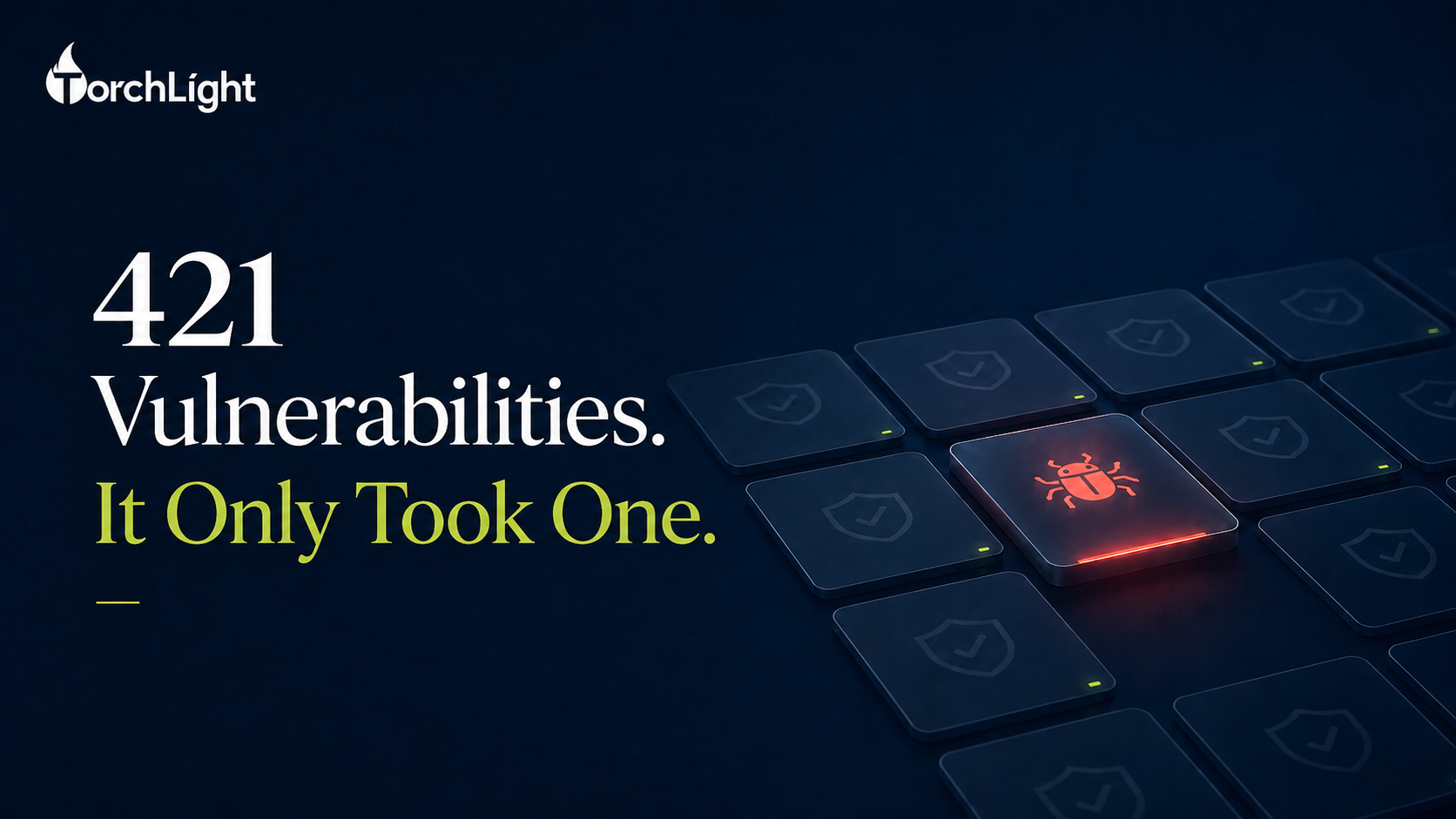
421 Vulnerabilities: It Only Took One
Manufacturing patch windows are limited, so prioritization matters. This analysis shows why active exploitation, system exposure, and operational importance can matter more than simply chasing the highest severity score.
Read the Analysis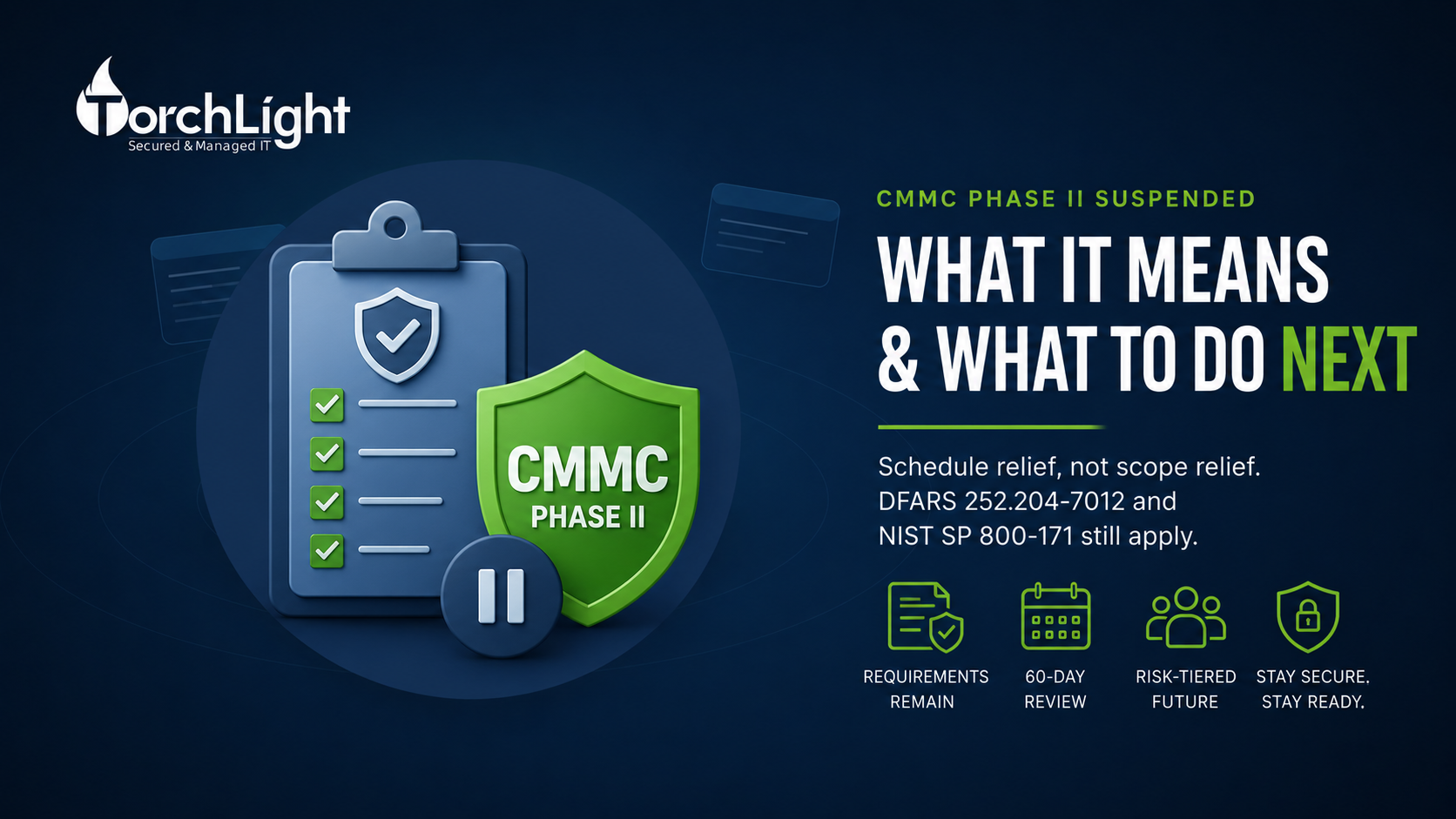
CMMC Phase II Suspended: What It Means and What to Do Next
For manufacturers and defense contractors handling CUI, the Phase II suspension changed the certification timeline, not the need to maintain applicable NIST SP 800-171 controls, self-assessments, evidence, and defensible security practices.
Read the AnalysisTechnology Accountability Shouldn’t Stop at the Edge of the Plant Floor.
TorchLight brings managed IT, cybersecurity, compliance, recovery, and technology leadership together so manufacturers have fewer gaps between the people, providers, and systems responsible for keeping operations moving.

Let’s Talk About What Your Operation Actually Needs.
Maybe the concern is production uptime, aging infrastructure, cyber insurance, CMMC, vendor access, backups, plant expansion, a security incident, or an internal IT team that needs more capacity.
Tell us what is happening. We can help determine whether the right next step is managed IT, managed cybersecurity, security and compliance assessment, or a more focused technology project.
Start the Conversation
Give us a little context about your manufacturing environment and we’ll connect you with the right person at TorchLight.