
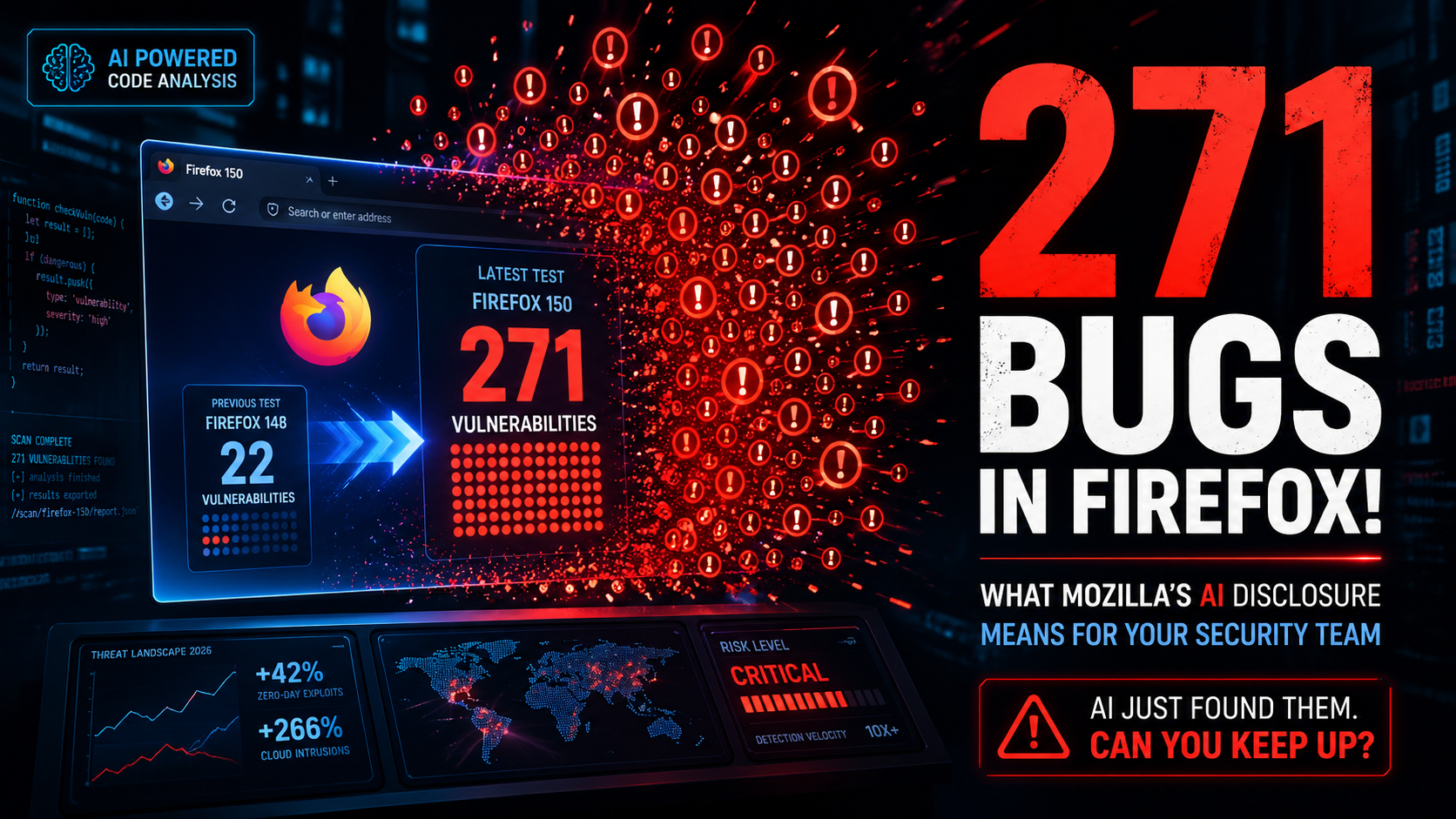
271 Bugs in Firefox! What Mozilla’s AI Disclosure Means for Your Security Team
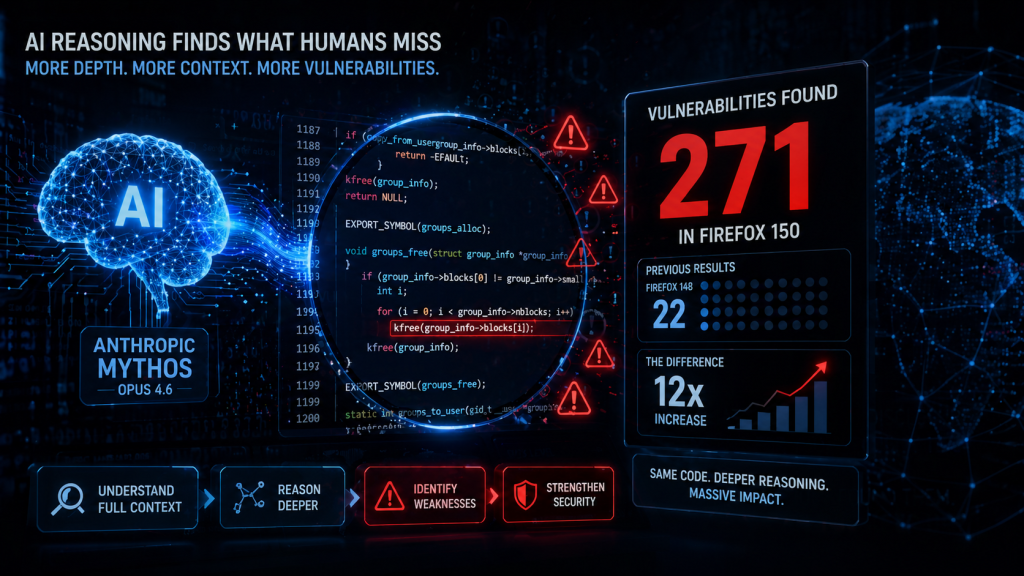
On Tuesday, Mozilla published the results of an internal test of Anthropic’s bug-finding model, Mythos, running on Opus 4.6, the focal point of Project Glasswing. When the project was pointed at Firefox version 150, the model surfaced 271 vulnerabilities. An earlier pilot against Firefox version 148 had returned 22 vulnerabilities, which was already worth addressing. The 12x jump prompted Mozilla CTO Bobby Holley to write that defenders “finally have a chance to win, decisively.” That is not a sentence the cybersecurity industry has heard from a credible source in a long time, and it is worth taking seriously.
The Complexity of the Vulnerabilities
Mythos appears to do that reasoning at machine speed. Mozilla’s exact assessment is that they have “found no category or complexity of vulnerability that humans can find that this model can’t.” If that holds outside Firefox, the attacker’s long-term advantage, concentrating months of human effort against a single high-value target begins to erode.
From 22 to 271: The Number That Gave Mozilla “Vertigo”
Hardened browsers represent some of the most heavily reviewed code in commercial software.
Surfacing 22 new bugs in Firefox 148 was already an outlier. Surfacing 271 in Firefox 150 was something else entirely. Holley described his team’s internal reaction as “vertigo,” writing that “for a hardened target, just one such bug would have been red-alert in 2025, and so many at once makes you stop to wonder whether it’s even possible to keep up.”
What mattered most was what wasn’t in the haul: novelty. Holley pushed back on the prediction that AI would discover entirely new categories of vulnerability. The bugs Mythos found were the kind elite humans could already find. The volume is going up. The novelty is not. The good guys preferred tactics to find the vulnerabilities demonstrates it’s value when put under stress-tests like this.
The Procurement Question That Didn’t Exist Yesterday
In regulated industries, the conversation has already shifted
Security questionnaires from financial services, healthcare, and critical infrastructure are starting to ask whether vendors use AI-assisted vulnerability discovery. Within a few exam cycles, that question moves from optional to expected. If you procure software that touches sensitive data, “When was your codebase last reviewed by a model with capabilities comparable to Anthropic’s?” is now a fair question, and vendors who can’t answer it credibly will be at a structural disadvantage.
Five Moves to Make Before Your Backlog Floods
The bottleneck is shifting from detection to triage and remediation. Finding 271 vulnerabilities is one problem. Patching them, regression-testing the fixes, and shipping without breaking production is a much larger one.
An Accelerating Trend, Not an Anomaly
Mozilla’s disclosure is not isolated.
The 2026 CrowdStrike Global Threat Report documented a 42% year-over-year increase in zero-day vulnerabilities exploited before public disclosure, and a 266% increase in cloud-conscious intrusions by Russia, China, Iran and North Korea threat actors. Sophisticated adversaries have already concluded the economics of bug discovery have shifted, and they are investing accordingly.
Your customers, members, patients, or constituents trust your organization with their information, and that trust extends to every system and every line of code under your name. The discipline of your vulnerability management process is what your auditor will evaluate, and the time to build it is before the disclosure email forces the question.
If this resonated, forward it to the security or IT lead in your organization who needs to see it before the next budget cycle.
TorchLight specializes in managed security services for organizations where security and compliance are non-negotiable. With 18+ years serving regulated industries, 24/7 SOC operations, and deep regulatory fluency across GLBA, HIPAA, and SEC requirements, TorchLight delivers security operations leadership can defend.
Ready to explore what partnership looks like? Schedule a consultation to discuss your organization’s specific security needs and regulatory requirements.