

AI Governance Solutions & Advisory Services
TorchLight’s Secured and Trusted AI deployment gives your organization enterprise AI governance over how AI interacts with your data, so you can enable innovation without creating threat exposure.
When employees use AI tools like Copilot, ChatGPT, and Gemini, they’re often querying systems that have no visibility into what data is being shared or surfaced. Without AI governance services, a single misconfigured permission or rogue upload can expose confidential records, financial data, or client information. Most organizations don’t know it’s happening until it’s too late.
Unified Governance
Is my data being used safely with AI? Our AI governance platform establishes a single point of visibility to monitor, audit, and manage how AI agents interact with your organizational data.
Contextual Data Integrity
We ensure the AI layer inherits your existing least-privilege access models as part of a defined AI risk management framework – preventing unauthorized data surfacing and ‘over-sharing’ risks before they occur.
Operational Resilience
We transition your team from human-led to AI-assisted productivity with built-in guardrails that protect intellectual property while accelerating business outcomes – grounded in a clear AI governance strategy tailored to your regulatory environment.
AI Governance Services – What’s Included with TorchLight
| Service | What it does |
|---|---|
| AI Hub & Data Security Posture Management | Monitors prompts and responses across M365 Copilot and 100+ third-party GenAI apps as part of continuous AI audit and compliance monitoring. |
| Identity Trust Hardening | Configures Entra ID risk-based conditional access to block compromised accounts from AI access — a core component of any AI risk management services program. |
| Communication Compliance Monitoring | Detects bias, unethical behavior, or AI regulatory compliance violations within AI interactions in Outlook and Teams. |
| AI Usage Audit & SOC Monitoring | Connects your Unified Audit Log to TorchLight’s SOC for continuous, 24/7 AI threat detection and monitoring of all AI activity. |
| Browser Extension Governance | Deploys the Microsoft Purview extension for Chrome and Firefox to control AI data sharing from the browser. |
| Azure Pay-As-You-Go Integration (optional) | Extends monitoring to non-Microsoft AI applications with consumption-based billing. |
The 30-Day Rapid Activation Roadmap
Most governance projects take months. Ours takes four weeks.
Week 1: Foundation
Copilot licenses activated; Entra ID conditional access configured.
Week 2: Guardrails
AI Hub and DSPM deployed across Copilot and third-party apps.
Week 3: Oversight
Communication compliance monitors set up; optional Azure integration.
Week 4: Validation
Final testing of the Secure Trust Boundary; handover to client.
Ongoing: Monitoring
SOC monitoring of Copilot activity via Unified Audit Log – keeping your AI compliance services posture continuously validated, not just verified at setup.
The Risk You’re Already Carrying
Your employees are already using AI. In most organizations, adoption started before any policy existed to govern it. They are uploading documents, pasting client data, and asking questions that touch your most sensitive information – using tools your security team has no visibility into. This is exactly why AI governance solutions exist: to close the gap between where AI adoption is and where your controls are.
The threats are not hypothetical. Researchers have identified over 50 cases of AI memory poisoning deployed by real companies across industries including finance, healthcare, and legal services – all designed to manipulate what an AI recommends in future conversations. In one class of attack, a single website visit is enough to alter the behavior of an employee’s AI assistant going forward, without any alert, any warning, or any indication that something went wrong. Effective AI governance consulting addresses these threat vectors before they become incidents.
Most organizations assume the risk lives somewhere else. It rarely does. The gap between when AI gets adopted and when governance gets implemented is where exposure happens. TorchLight closes that gap.

Ready to put guardrails on your AI environment?
TorchLight helps organizations deploy AI with the controls, visibility, and audit trail needed to stay secure and stay compliant. Our AI governance solutions are designed for regulated industries where the cost of getting this wrong, with regulators, insurers, or clients – is simply too high. Talk to our team about what governance looks like for your organization.
Frequently Asked Questions
What are AI governance solutions, and why does my business need them?
AI governance solutions are the controls, policies, visibility tools, and monitoring processes that define how AI interacts with your organization’s data. Without them, employees using tools like Copilot, ChatGPT, or Gemini can inadvertently expose confidential records, share client data with external systems, or trigger compliance violations – often without anyone knowing until it’s too late.
What does AI governance consulting from TorchLight include?
Our AI governance consulting covers the full lifecycle: assessing your current AI exposure, configuring identity and access controls, deploying monitoring across Copilot and third-party AI apps, setting up communication compliance, and connecting everything to our 24/7 SOC. You get a documented program, not just a tool deployment.
How does TorchLight approach AI risk management?
Our AI risk management framework starts with understanding where AI is already being used in your organization, often broader than IT realizes. We then map data access risks, configure least-privilege controls at the AI layer, and implement continuous monitoring so risks are caught before they become incidents rather than after.
What is an AI governance platform, and does TorchLight provide one?
An AI governance platform is the technology layer: tools like Microsoft Purview, Entra ID, and the M365 Unified Audit Log, that gives your organization visibility and control over AI activity. TorchLight configures, manages, and monitors this stack on your behalf, so you have a fully operational governance platform without needing to build the expertise in-house.
How do you handle AI regulatory compliance for regulated industries?
AI regulatory compliance for financial services, healthcare, and public-sector organizations requires more than standard IT controls. TorchLight aligns every layer of the governance stack, identity access, communication compliance, audit logging, and SOC monitoring — with the expectations of regulators like NCUA, FFIEC, and HIPAA, so your AI program can survive an exam.
What is AI threat detection and monitoring, and how does it work?
AI threat detection and monitoring is the continuous surveillance of how AI tools are being used within your organization, what prompts are being entered, what data is being surfaced, and whether any AI interactions show signs of manipulation, policy violation, or data leakage. TorchLight connects your Unified Audit Log to our SOC so this monitoring runs 24/7, with human analysts reviewing anomalies.
What is AI audit and compliance monitoring?
AI audit and compliance monitoring means maintaining a continuous, documented record of AI activity across your environment, what tools were used, by whom, what data was accessed, and whether any interactions violated policy or regulatory requirements. TorchLight’s AI Hub and SOC integration delivers this as an ongoing service, so you always have the audit trail you need for exams and renewals.
Do you offer AI governance strategy development for organizations just getting started?
Yes. Many organizations come to us with AI tools already in use but no formal policy or governance layer in place. Our AI governance strategy engagement starts with an assessment of your current AI exposure, then builds a prioritized roadmap – covering policy, access controls, monitoring, and compliance alignment — that can be activated in as little as 30 days.
What AI compliance services does TorchLight provide on an ongoing basis?
Our ongoing AI compliance services include continuous SOC monitoring of AI activity via the Unified Audit Log, communication compliance oversight within Outlook and Teams, regular posture reviews, and updated controls as AI tools and regulatory expectations evolve. The goal is to keep your governance program current, not just compliant at the point of deployment.
How does AI risk management services differ from standard cybersecurity?
AI risk management services focus specifically on the risks introduced by AI tools, data over-sharing, prompt injection, memory poisoning, unauthorized access through AI agents, and regulatory exposure from AI-generated content. Standard cybersecurity typically doesn’t cover these attack surfaces. TorchLight’s AI governance program addresses both, integrating AI-specific controls with your broader security posture.
Latest Insights & Blog
Expert insights on cybersecurity, compliance, and IT strategy.
-
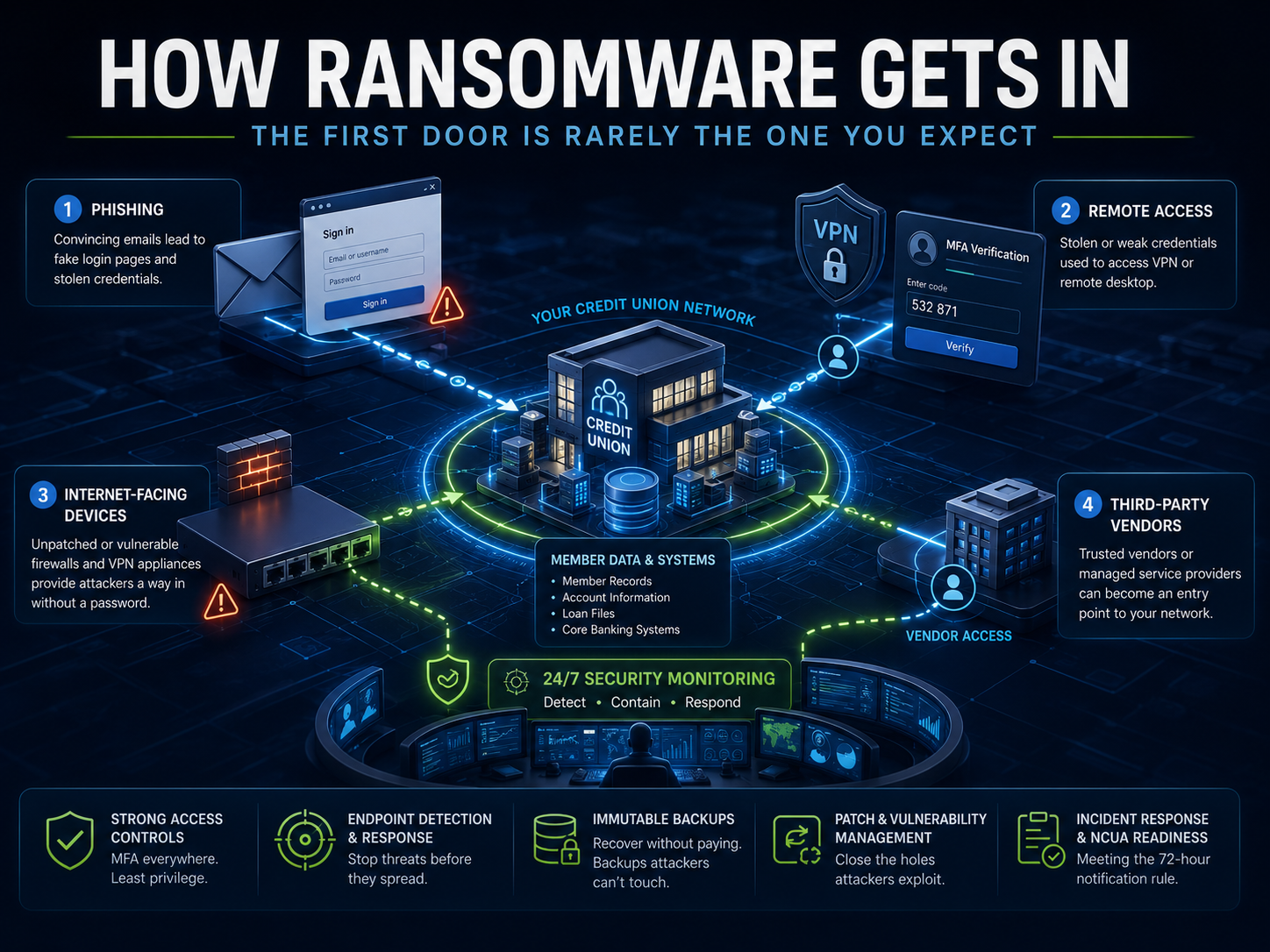
How Ransomware Enters a Credit Union Network
Ransomware rarely breaks into a credit union through the servers. It enters through a person or a weak remote login, then moves laterally in about 29 minutes. This is the real entry chain behind the Akira attacks on Ellafi and MetroWest credit unions, and the controls that stop it.
-
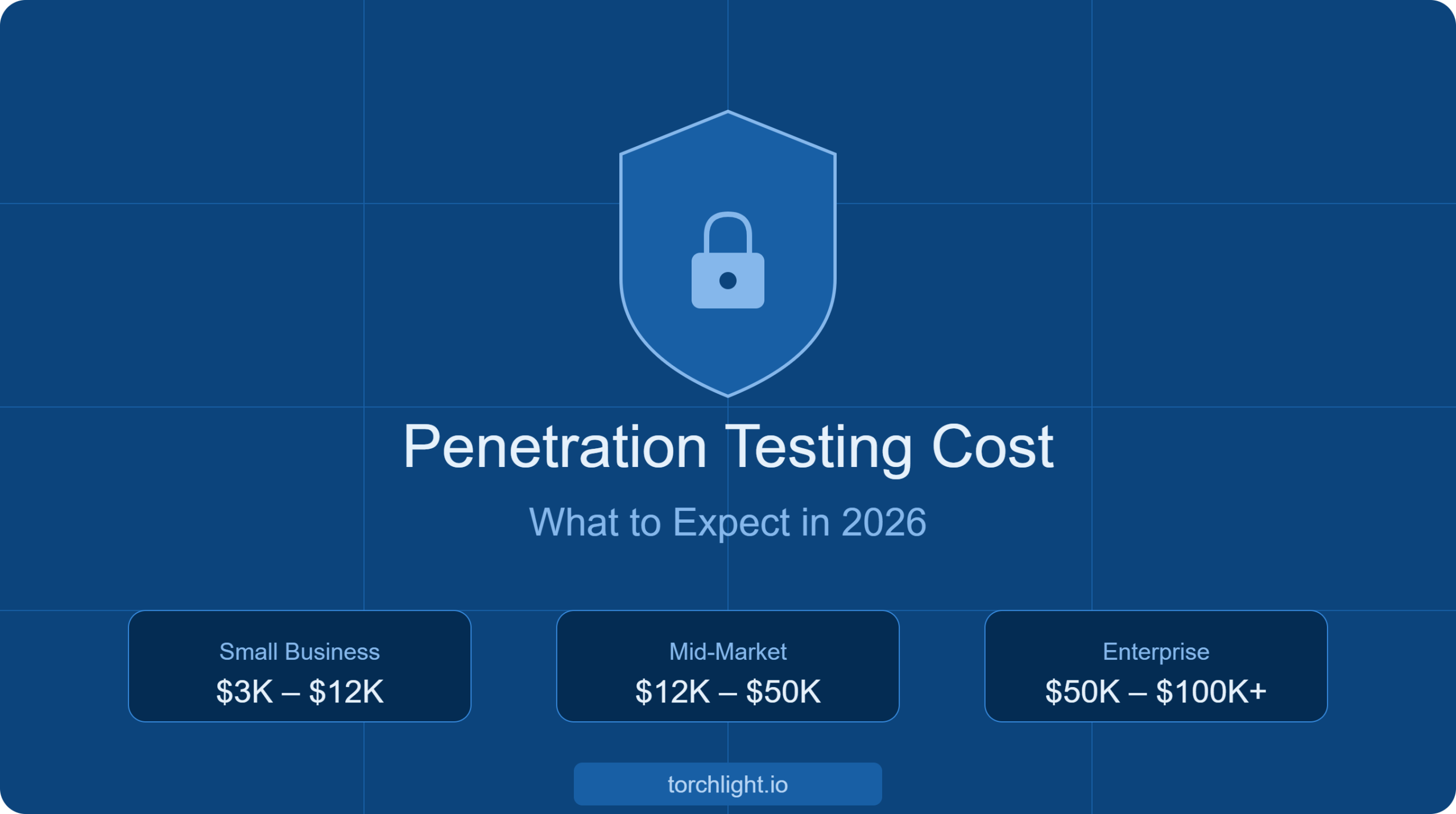
Penetration Testing Cost: What to Expect in 2026
If you’ve been tasked with budgeting for a penetration test, or justifying the expense to leadership, you’ve probably already discovered that penetration testing cost isn’t as straightforward as a line item on a vendor’s website. Prices vary wildly, scope is rarely apples-to-apples, and the cheapest option is often the most expensive mistake you can make.…
-
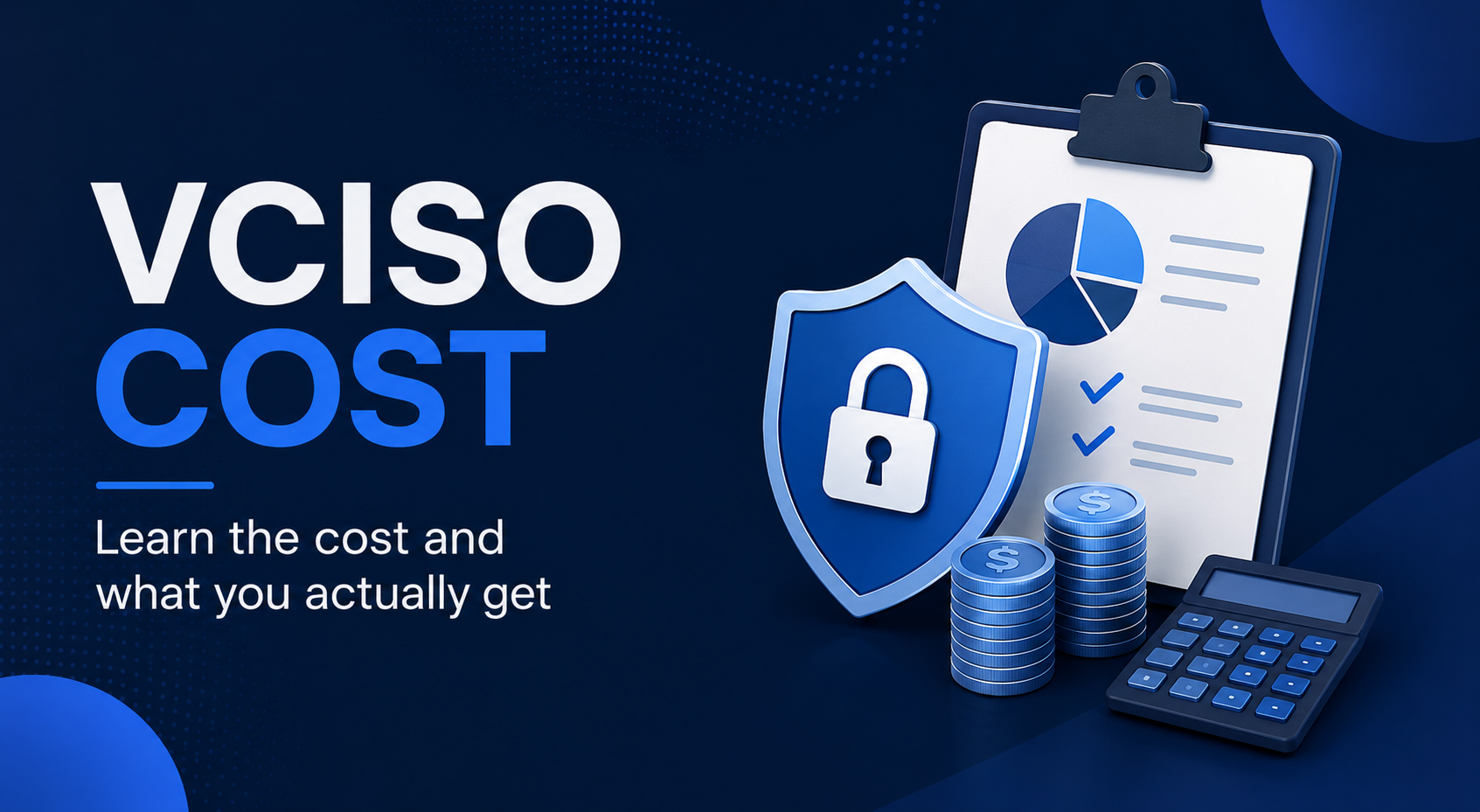
What is a vCISO? Cost, Role, and When to Hire One
When businesses think about cybersecurity leadership, a Chief Information Security Officer (CISO) often comes to mind. However, hiring a full-time CISO may not be practical for every organization. A vCISO provides businesses with experienced cybersecurity services, leadership, strategy, and guidance on a flexible basis without the cost and commitment of a permanent executive hire. A…