
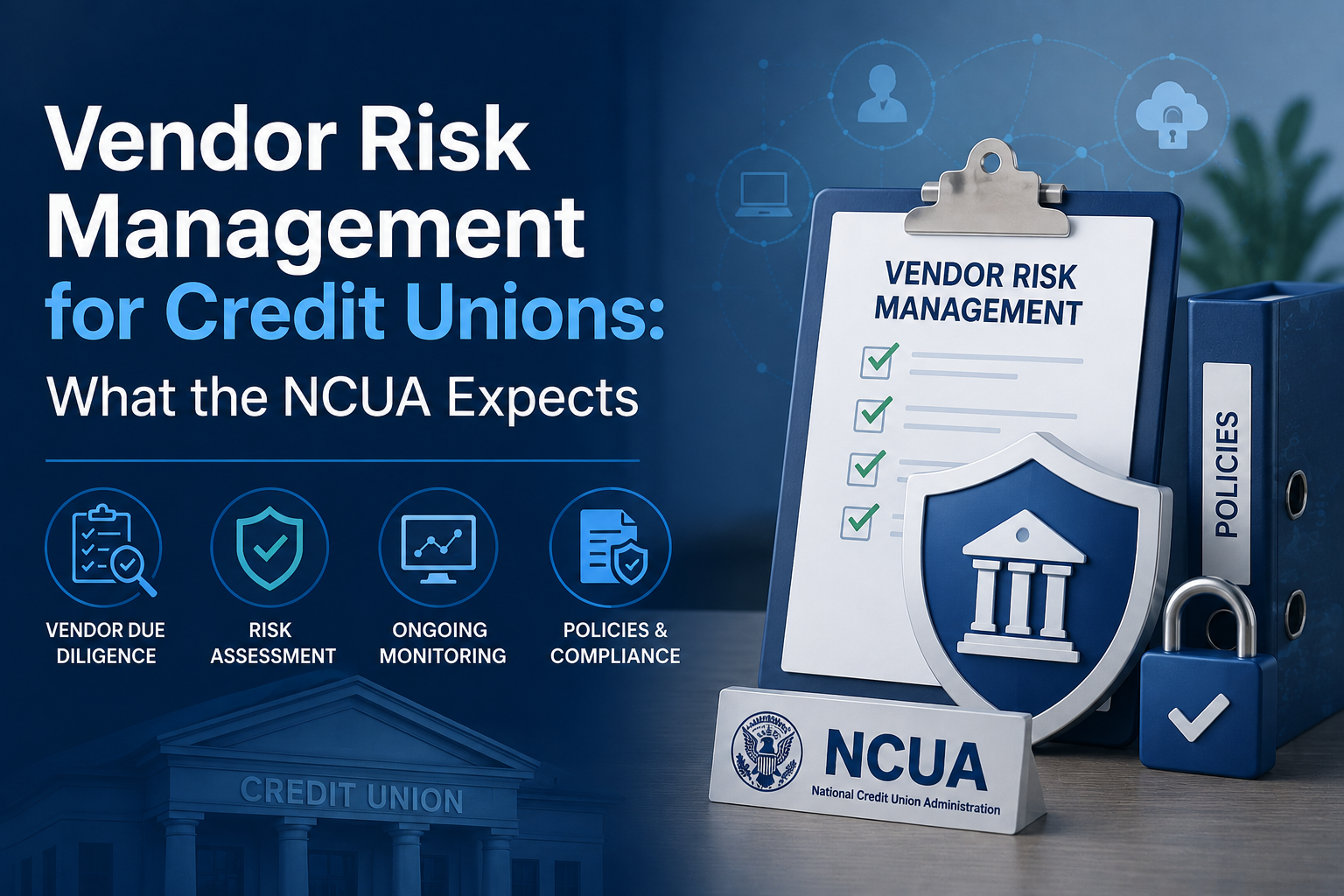
Credit unions rely on third-party vendors for services such as digital banking, cloud platforms, payment processing, and fintech solutions. While these partnerships improve efficiency and member experiences, they also introduce cybersecurity, compliance, operational, and reputational risks that require careful oversight.
As a result, vendor risk management for credit unions remains a key focus during NCUA examinations. Credit unions must demonstrate effective vendor due diligence, risk assessments, and ongoing monitoring to meet regulatory expectations.
Whether you’re evaluating a fintech provider, reviewing a cloud service agreement, or strengthening your existing oversight program, implementing strong AI governance practices can help manage emerging risks associated with AI-powered vendors and automated decision-making. This guide explains NCUA vendor management requirements, third-party risk management best practices, and how to build a stronger vendor oversight program.
Why Vendor Risk Management Matters for Credit Unions
Today’s credit unions depend on external partners more than ever, including cloud providers, cybersecurity firms, and managed IT services providers that support daily operations and infrastructure. Core banking systems, payment processors, online banking platforms, managed service providers, cybersecurity vendors, and fintech partners all play important roles in daily operations.
However, third-party relationships create risks such as:
- Cybersecurity breaches
- Service disruptions
- Compliance violations
- Data privacy incidents
- Financial losses
- Reputational damage
A vendor’s security weakness can quickly become a credit union’s problem. As a result, regulators expect institutions to maintain comprehensive oversight of their vendor ecosystem and demonstrate effective NCUA third-party vendor oversight practices.
What Does the NCUA Require for Credit Union Vendor Management?
One of the most common questions compliance teams ask is:
What does NCUA require for credit union vendor management?
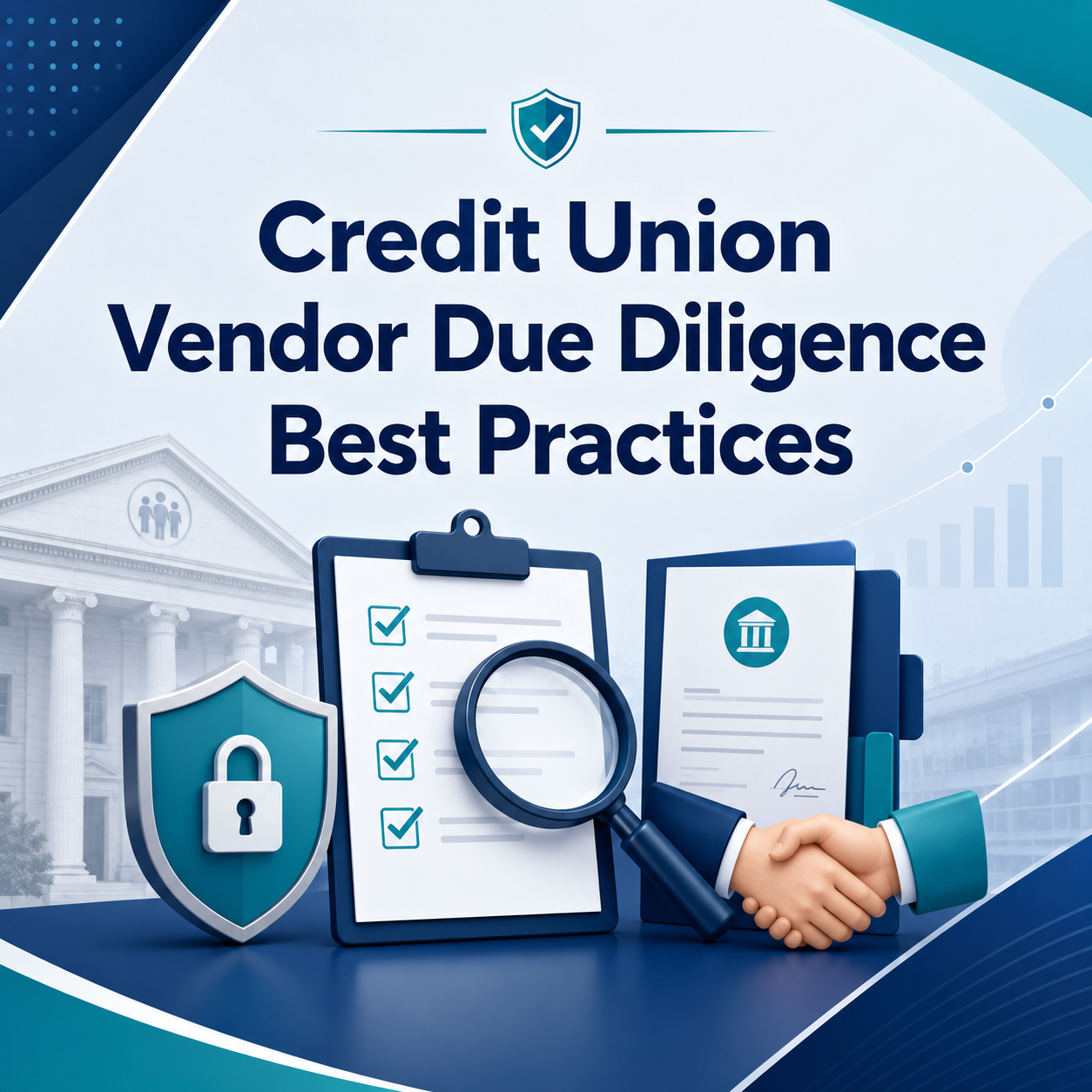
The NCUA expects credit unions to establish a formal vendor management framework that identifies, assesses, monitors, and manages third-party risk.
Key expectations include:
- Vendor risk assessments
- Due diligence reviews
- Contract evaluations
- Ongoing vendor monitoring
- Board oversight
- Documentation and reporting
- Risk-based vendor classification
The agency’s guidance emphasizes that vendor oversight should be proportional to the risk each third-party relationship presents.
In practice, this means a payment processor handling member data requires significantly more scrutiny than a low-risk office supply provider.
Building a Vendor Risk Management Program for a Credit Union
Organizations frequently ask how to build a vendor risk management program for a credit union that satisfies regulatory expectations. Many institutions leverage vCISO consulting services to establish governance, risk management processes, and vendor oversight frameworks.
A mature TPRM program credit union should include the following components:
1. Maintain a Complete Vendor Inventory
Every credit union should maintain an up-to-date credit union vendor inventory that includes:
- Vendor names
- Services provided
- Contract dates
- Data access levels
- Risk classifications
- Business owners
Without a centralized inventory, it becomes difficult to identify critical vendors and monitor risks effectively.
2. Classify Vendors Based on Risk
Not all vendors present the same level of risk. Credit unions should categorize vendors based on factors such as access to member information, financial impact, operational dependency, regulatory implications, and cybersecurity exposure.
This process helps determine the level of oversight required for each relationship.
3. Perform Vendor Risk Assessments
An NCUA vendor risk assessment should be conducted before onboarding a vendor and periodically throughout the relationship. Assessment criteria often include information security controls, financial stability, business continuity capabilities, compliance posture, incident response maturity, and regulatory history.
A documented credit union vendor risk assessment template can help standardize evaluations across all third parties.
Credit Union Vendor Due Diligence Best Practices
How should a credit union perform vendor due diligence?
Effective credit union vendor due diligence begins before a contract is signed. The due diligence process should evaluate:
1. Financial Health
Review financial statements and determine whether the vendor has the resources necessary to maintain operations.
2. Information Security Controls
Assess cybersecurity programs, security certifications, independent audit reports, and determine whether vendors maintain effective managed security services to detect and respond to threats.
3. Compliance Readiness
Determine whether the vendor complies with applicable regulations and industry standards.
4. Business Continuity Planning
Review disaster recovery capabilities and operational resilience procedures.
5. Reputation and Performance
Investigate litigation history, regulatory actions, customer references, and service reliability.
Does NCUA Require SOC 2 Reports From Credit Union Vendors?
While the NCUA does not explicitly require SOC 2 reports for every vendor, they are often considered a best practice for evaluating security controls.
A thorough vendor SOC 2 report review can provide valuable insight into security controls, availability controls, data confidentiality practices, incident management processes, and risk management capabilities. For vendors that handle sensitive member information, SOC 2 reports frequently become a critical component of vendor due diligence.
Critical Vendor Oversight for Credit Unions
What vendors does NCUA consider critical?
Critical vendors typically include providers whose failure could significantly disrupt operations or impact members.
Examples include:
- Core processing providers
- Online banking platforms
- Payment processors
- Managed service providers
- Cloud infrastructure vendors
- Cybersecurity service providers
Strong critical vendor oversight credit union practices should include enhanced monitoring, executive reporting, and more frequent assessments.
Vendor Contract Review for Credit Unions
Vendor contracts play a major role in risk management. A thorough vendor contract review process should evaluate:
- Data ownership provisions
- Security requirements
- Service level agreements (SLAs)
- Incident notification obligations
- Audit rights
- Business continuity expectations
- Termination provisions
Weak contractual language often becomes a major issue during regulatory reviews.
How Often Should Credit Unions Review Vendor Contracts?
Contracts should be reviewed: before renewal, following significant regulatory changes, after major service modifications, and when vendor risk profiles change.
Regular reviews help ensure contractual protections remain aligned with business and regulatory requirements.
Ongoing Vendor Monitoring and Fourth-Party Risk
Vendor oversight does not end after onboarding. Effective credit union vendor monitoring includes annual risk reviews, security assessments, performance evaluations, compliance monitoring, and financial health reviews.
Credit unions should also consider third-party risk credit union exposure.
Fourth parties are the subcontractors and service providers used by your vendors. A security incident affecting a vendor’s subcontractor can ultimately affect your institution as well.
Fintech Partnerships and Emerging Risks
As digital transformation accelerates, credit union fintech vendor risk has become an increasing area of concern.
How to Assess Fintech Vendors for a Credit Union
When evaluating fintech providers, credit unions should assess data protection practices, regulatory compliance, API security, financial viability, operational maturity, and third-party dependencies. Fintech partnerships often create unique risks that require enhanced due diligence and monitoring.
NCUA Examination Findings on Vendor Management
What happens if a credit union fails a vendor management NCUA exam?
Common examination findings include:
- Incomplete vendor inventories
- Insufficient due diligence documentation
- Missing risk assessments
- Weak contract reviews
- Lack of ongoing monitoring
- Inadequate board reporting
Deficiencies may result in corrective action requirements, increased regulatory scrutiny, or heightened examination focus. Maintaining strong documentation and demonstrating consistent oversight are critical for exam readiness.
Final Thoughts
Vendor relationships are essential to modern credit union operations, but they also introduce significant operational, compliance, and cybersecurity risks. A strong vendor risk management credit union program helps institutions identify, assess, and mitigate these risks while meeting evolving regulatory expectations.
By implementing comprehensive NCUA third-party relationship management practices, conducting thorough vendor due diligence, maintaining effective monitoring processes, and strengthening oversight of critical vendors, credit unions can improve resilience, support compliance, and protect member trust.
If your credit union needs help strengthening vendor oversight, compliance readiness, or third-party risk management, explore TorchLight’s cybersecurity and risk management solutions.
FAQs
1. What does NCUA require for credit union vendor management?
The NCUA expects credit unions to maintain a documented vendor management program that includes risk assessments, due diligence, contract reviews, ongoing monitoring, and board oversight.
2. How should a credit union perform vendor due diligence?
Vendor due diligence should evaluate financial stability, cybersecurity controls, compliance posture, operational resilience, and vendor reputation before onboarding.
3. What is a third-party risk management program for credit unions?
A third-party risk management program is a structured framework used to identify, assess, monitor, and mitigate risks associated with external vendors and service providers.
4. What vendors does NCUA consider critical?
Critical vendors typically include core processors, payment providers, cloud platforms, online banking vendors, and other providers essential to operations.
5. Does NCUA require SOC 2 reports from credit union vendors?
While not explicitly required, SOC 2 reports are widely used to evaluate vendor security controls and support due diligence efforts.