
Stop Email Spoofing Before It Reaches Your Customers
Defend your brand, protect your customers, and cut the risk of phishing attacks by over 92%!
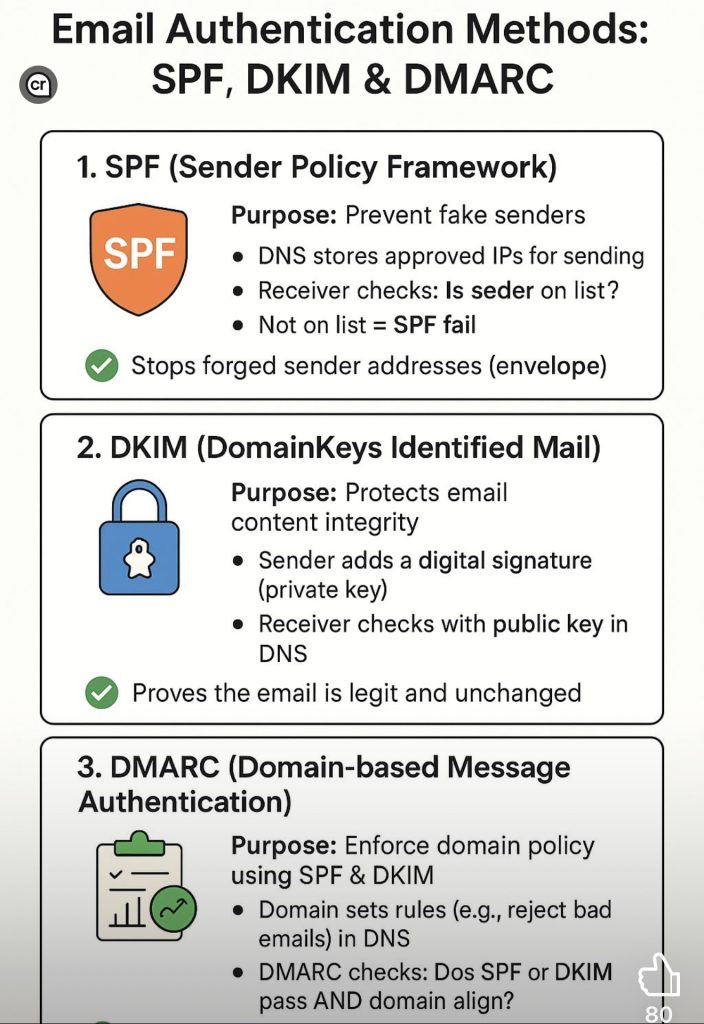
Why DMARC is essential for modern business email security
Every day, cybercriminals send millions of fraudulent emails that appear to come from legitimate businesses. These attacks damage customer trust, put your brand at risk, and can lead to financial and legal consequences.
DMARC (Domain-based Message Authentication, Reporting, and Conformance) is the industry standard for stopping these attacks before they reach inboxes. It works by verifying that emails sent from your domain are truly from you, blocking unauthorized senders, and giving you visibility into how your domain is being used.
Why DMARC matters:
Gives you actionable reports on domain activity
Protects your brand reputation
Blocks phishing and spoofing attempts
Increases email deliverability and trust
Gives you actionable reports on domain activity
Limited-Time Offer
For a limited time, get 50% off your DMARC service for the first 4 months when you sign up through this promotion.
Don’t wait until a phishing email damages your reputation. Secure your domain today and give your customers confidence that emails from you are legitimate.
Get Started and Claim 50% Off
Latest Insights & Blog
Expert insights on cybersecurity, compliance, and IT strategy.
-
The After-Hours Threat Credit Unions Can’t Ignore
Cyber threat actors target credit unions when their staff aren’t looking. Here’s what two high-profile breaches reveal about attacker timing, and how small IT teams can close the coverage gap.
-

The Clock Is Ticking: What the June 3 Reg S-P Deadline Means For Smaller RIAs
The SEC’s amendments to Regulation S-P start applying to RIAs managing under $1.5 billion on June 3rd. Is your data security posture ready?
-

How AI Is Making Phishing Attacks More Dangerous, More Convincing, and Harder to Spot
AI has made phishing attacks so convincing and common that credit unions can no longer rely on employee vigilance alone to stop them.
-
Supply-Chain Attacks: How Trusted Vendors Could Be Your Biggest Cybersecurity Threat
A compromised vendor can expose your members’ data even when your own defenses hold, which is why active third-party oversight is now a regulatory and security necessity.
-
The Invisible Threat of Malware-Free Attacks
Modern cyberattacks increasingly bypass antivirus entirely by exploiting legitimate tools and stolen credentials, leaving no malicious file to detect.
-

Browser Extensions Are the Security Gap Nobody Is Watching
Browser extensions are one of the least scrutinized kinds of software in use by an organization. They’re also one of the most dangerous.
-

Loyalty and Cybersecurity – The Loyalty Blind Spot
A Google engineer’s conviction for stealing AI secrets using Apple Notes exposes the dangerous assumption that employee loyalty, once earned through tenure and performance, remains permanent regardless of changing financial pressures or external recruitment offers.
-
NCUA’s AI Compliance Plan: What It Signals for Credit Unions (and How to Get Ahead of It)
Artificial intelligence is moving from “innovation project” to operational reality across financial services. Regulators are responding the way they always do when a technology starts touching mission critical decisions: by building governance, documenting controls, and raising expectations for transparency and accountability.
-

The Year Systems Broke and Why 2026 Demands Action
If you assumed your security controls were working in 2025, you weren’t alone. So did 99% of defense contractors who failed CMMC compliance. So did organizations running on AWS when a 15-hour DNS error took down their operations.
-
Payment Remittance Phishing Attacks Security Bulletin
Over the past several days, the TorchLight Security Operations Center has observed a rapid escalation in payment remittance phishing attacks targeting end users across multiple industries. While these phishing techniques aren’t new, the scale and frequency of this week’s activity represent a significant shift in threat actor behavior. In this post, we break down what…