
AI Workflow Automation Services for Regulated Businesses
Design, document, and automate repetitive business processes with AI workflow automation services built for secure, scalable, and compliance-driven operations.
AI Workflow Automation and Business Process Automation Services
From manual, error-prone processes to intelligent automation solutions that protect compliance and drive consistent growth.
Our workflow automation services support organizations looking to streamline processes, reduce administrative overhead, and build more reliable operations through intelligent automation services and AI business automation.
How AI Workflow Automation Services Improve Business Operations
We help organizations move beyond disconnected scripts and one-off automations into scalable workflow automation services that improve efficiency, reduce operational friction, and support long-term business growth.
Process Discovery and Design
We map your current workflows, identify bottlenecks, and design a future state that reduces handoffs, errors, and rework while aligning with your controls.
Workflow Automation Integration Services
We connect the tools you already own, so data moves cleanly between systems and the right people are notified at the right time.
Copilot and M365 Enablement
We help teams adopt Microsoft Copilot, Power Automate, and AI business automation tools with governance, prompts, and workflow structures
Human-in-the-Loop Guardrails
Our intelligent automation services include approval layers, reviews, and governance controls, so AI workflow automation improves speed without any risks.
Monitoring, Metrics, and Improvement
Track automation performance through dashboards, reporting, and process metrics that show where workflow automation services are improving productivity
Compliance and Risk Aligned Automation
For regulated organizations, we align AI workflow automation services with compliance requirements, documentation standards, security controls, and data governance expectations.
Why Choose TorchLight as Your AI Workflow Automation Services Provider?
At TorchLight, we believe intelligent automation solutions should make your business more predictable, not more chaotic. Unlike firms that drop tools into your environment and move on, we start with the systems that run your organization. Our AI workflow automation consulting approach identifies where automation genuinely reduces noise, eliminates manual rework, and lowers operational risk, before a single workflow gets built.
Our team brings together IT, cybersecurity, and AI business process automation expertise, so every workflow we build respects role-based access controls, audit trail requirements, and examiner expectations from day one. For credit unions, banks, healthcare organizations, and other regulated businesses, that combination is rare. Most automation firms don’t think in terms of compliance controls. We do, because our roots are in managed IT and security services for regulated industries.
The result is a documented process automation roadmap, compliant workflow designs, and intelligent business process automation that your team can actually own. You gain operational capacity, process consistency, and the confidence that critical workflows run the same way every time, whether key staff are in the office or not. That’s what a real AI workflow automation services engagement looks like: not just technology delivered, but a more resilient operating model built.
Frequently Asked Questions
What are AI workflow automation services?
AI workflow automation services use artificial intelligence and automation tools to streamline repetitive business processes, reduce manual work, improve accuracy, and increase operational efficiency. These services help organizations automate approvals, reporting, communication workflows, document handling, and other operational tasks across departments.
How does AI workflow automation work for regulated industries like banking and healthcare?
Unlike standard automation, business process automation services for regulated industries must respect role-based access controls, maintain complete audit trails, and align with documentation standards that hold up under regulatory examination. TorchLight builds these compliance controls into every workflow from day one, so efficiency gains never come at the cost of a compliance gap.
What is the difference between business process automation and AI workflow automation?
Business process automation focuses on automating repetitive operational tasks and workflows, while AI workflow automation adds intelligence through decision-making, content generation, data analysis, and predictive actions. Combining both creates more adaptive and efficient workflow automation solutions.
Do you offer AI automation consulting before we commit to a full build?
Yes. We offer an Automation Assessment as a starting point. Our AI automation consulting engagement covers your current workflows, the biggest automation opportunities, the right tools for your environment, and a realistic roadmap – before any build work begins.
Can you help implement Microsoft Power Automate and Copilot for our organization?
Yes. TorchLight provides Microsoft Power Automate implementation and Microsoft Copilot enablement services aligned to your governance framework, security controls, and Microsoft 365 environment. For organizations in regulated industries, we also ensure every deployment meets your data governance and compliance requirements before go-live.
Are AI workflow automation services secure for regulated industries?
Yes. Our AI workflow automation services are designed with security, governance, and compliance in mind. We implement role-based access controls, approval workflows, audit logging, and process documentation to support regulated organizations in industries such as finance, healthcare, and professional services.
What does intelligent workflow automation look like in practice?
Intelligent workflow automation means your systems don’t just move data, they make context-aware decisions. For example: routing an approval based on dollar threshold, flagging an anomaly for human review, or triggering a compliance documentation step automatically when a process milestone is reached.
Is TorchLight an AI automation services provider or a traditional IT firm?
Both. As an AI automation services provider with deep roots in IT and cybersecurity, TorchLight brings something most pure automation firms can’t: the ability to design automations that respect your security controls, compliance requirements, and IT infrastructure from day one.
Can you help with enterprise AI automation consulting for multi-department rollouts?
Yes. Our enterprise AI automation consulting engagements are designed for organizations rolling out automation across multiple teams or departments. We work with leadership, IT, and operations together to ensure the rollout is structured, documented, and aligned with your overall governance framework.
What is human-in-the-loop AI automation and why does it matter for compliance?
Human-in-the-loop AI automation builds defined approval checkpoints into automated workflows so your team stays accountable for outcomes while AI handles the surrounding work. For credit unions, banks, and healthcare organizations, this design approach satisfies examiner expectations and maintains the accountability standards required in regulated environments.
Latest Insights & Blog
Expert insights on cybersecurity, compliance, and IT strategy.
-
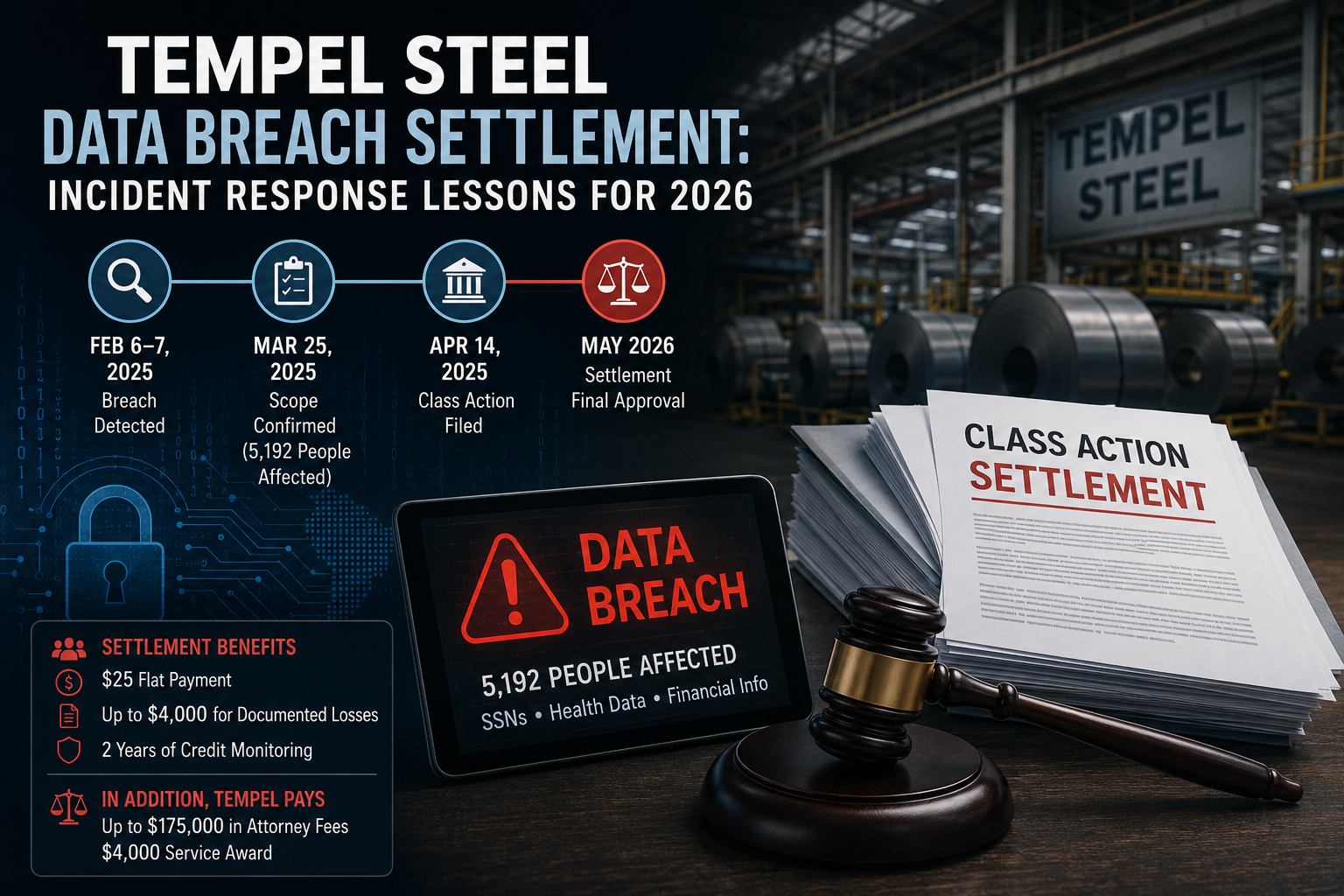
Tempel Steel Data Breach Settlement: Incident Response Lessons for 2026
Tempel Steel confirmed its breach on March 25, 2025. Twenty days later it was named in a class action, and by 2026 it faced up to $175,000 in fees plus multi-year liability, for just 5,192 employee records. Here’s what the settlement teaches financial, healthcare, and education IT leaders about response timelines.
-
The Biggest 4th of July Breach in History & the Real Cybersecurity Lessons Behind It
The biggest 4th of July breach in history took out an entire invading fleet with a single upload. The twist is that it happened in the 1996 movie Independence Day. The aliens still lost for real reasons though: no network segmentation, blind trust, and an unsigned payload. Those are the lessons worth bringing to your…
-
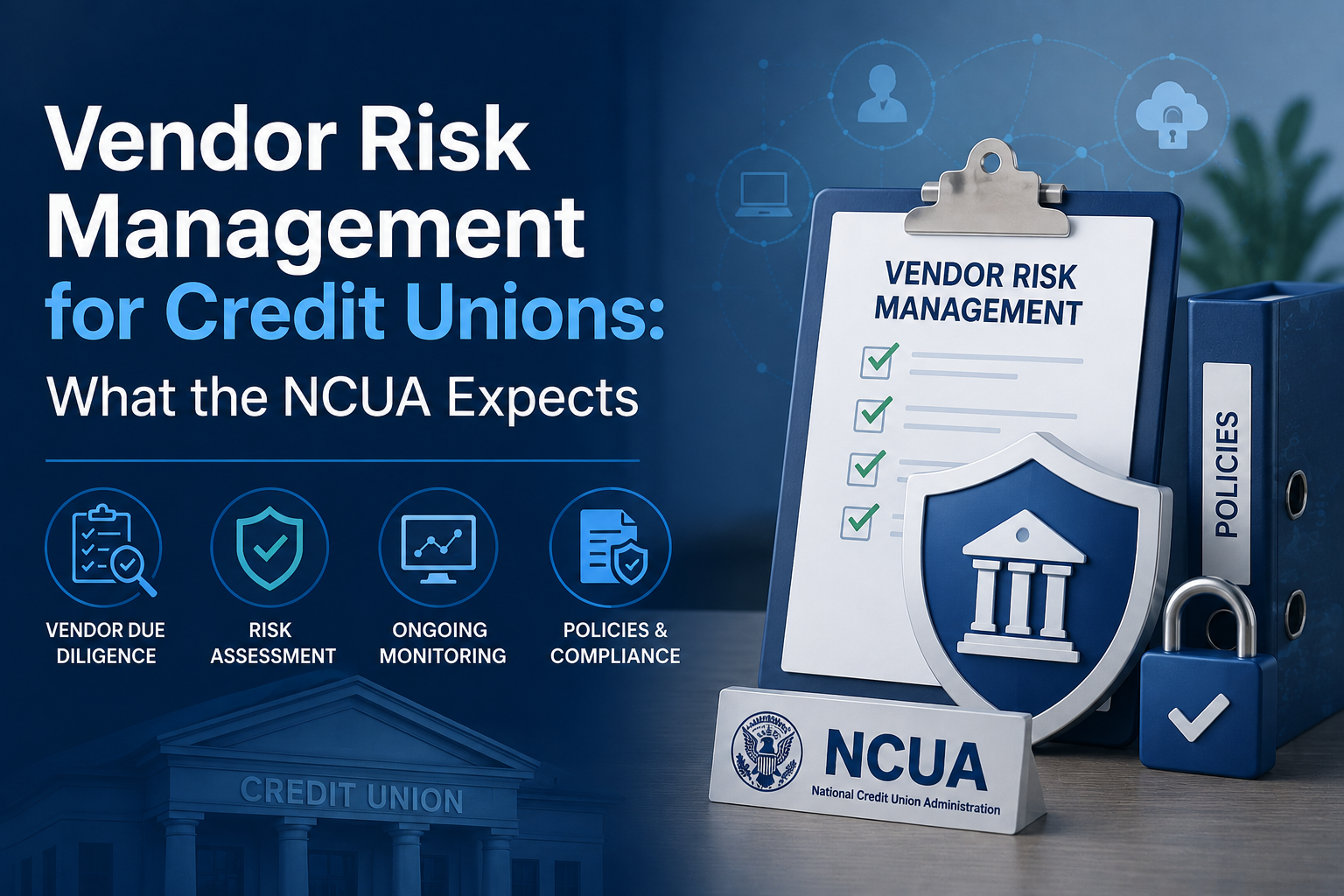
Vendor Risk Management for Credit Unions: What the NCUA Expects
Credit unions rely on third-party vendors for services such as digital banking, cloud platforms, payment processing, and fintech solutions. While these partnerships improve efficiency and member experiences, they also introduce cybersecurity, compliance, operational, and reputational risks that require careful oversight. As a result, vendor risk management for credit unions remains a key focus during NCUA…
-
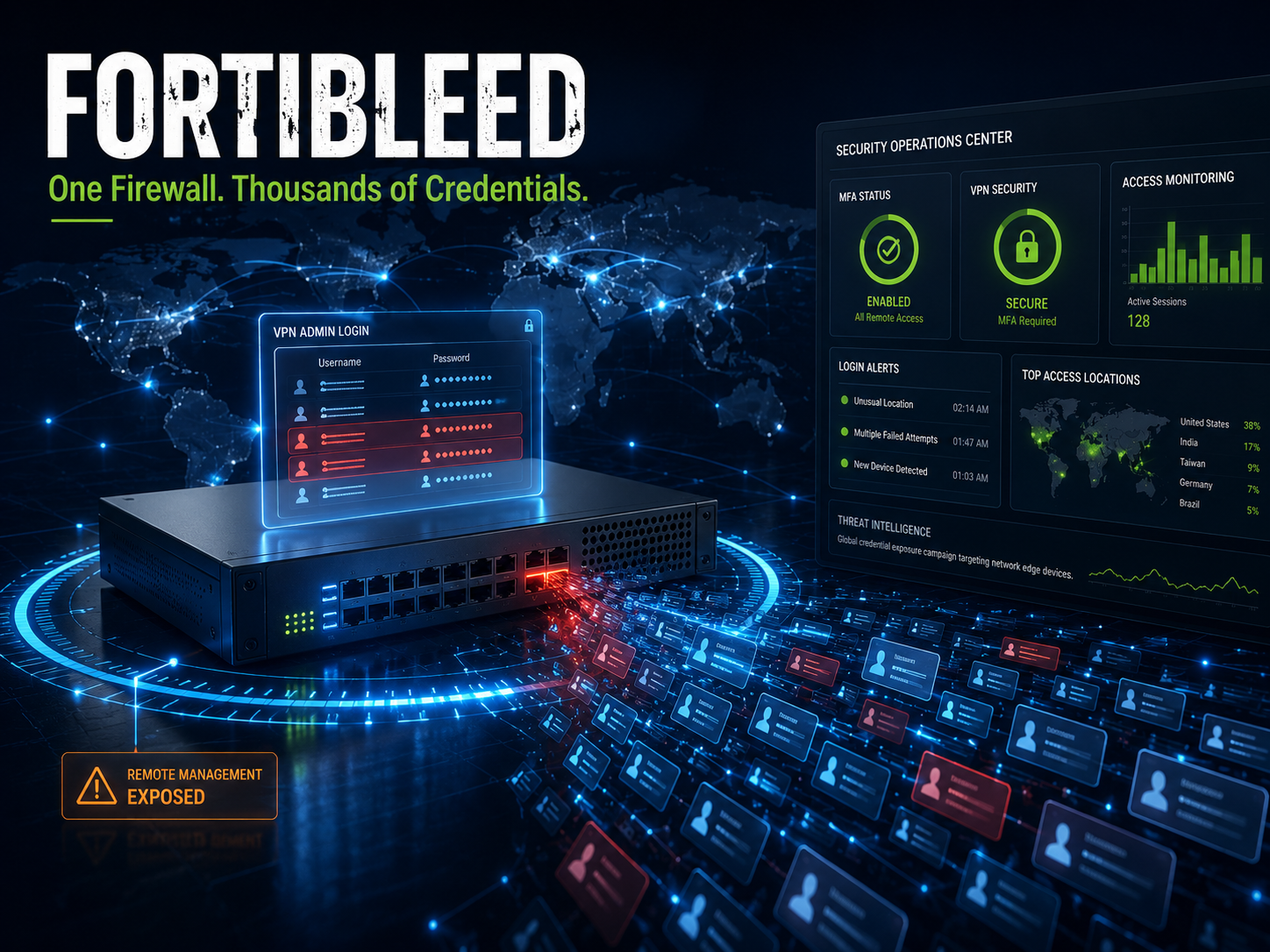
FortiBleed: 73,000 Fortinet Firewalls Exposed, and What Every Organization Must Do Now
FortiBleed is one of the largest firewall credential leaks ever found: working VPN logins for 73,932 Fortinet firewalls across 21,600 organizations and 194 countries. Strong passwords did not stop it. See what the leak means for your sector and the steps to take in the next 24 hours.
-
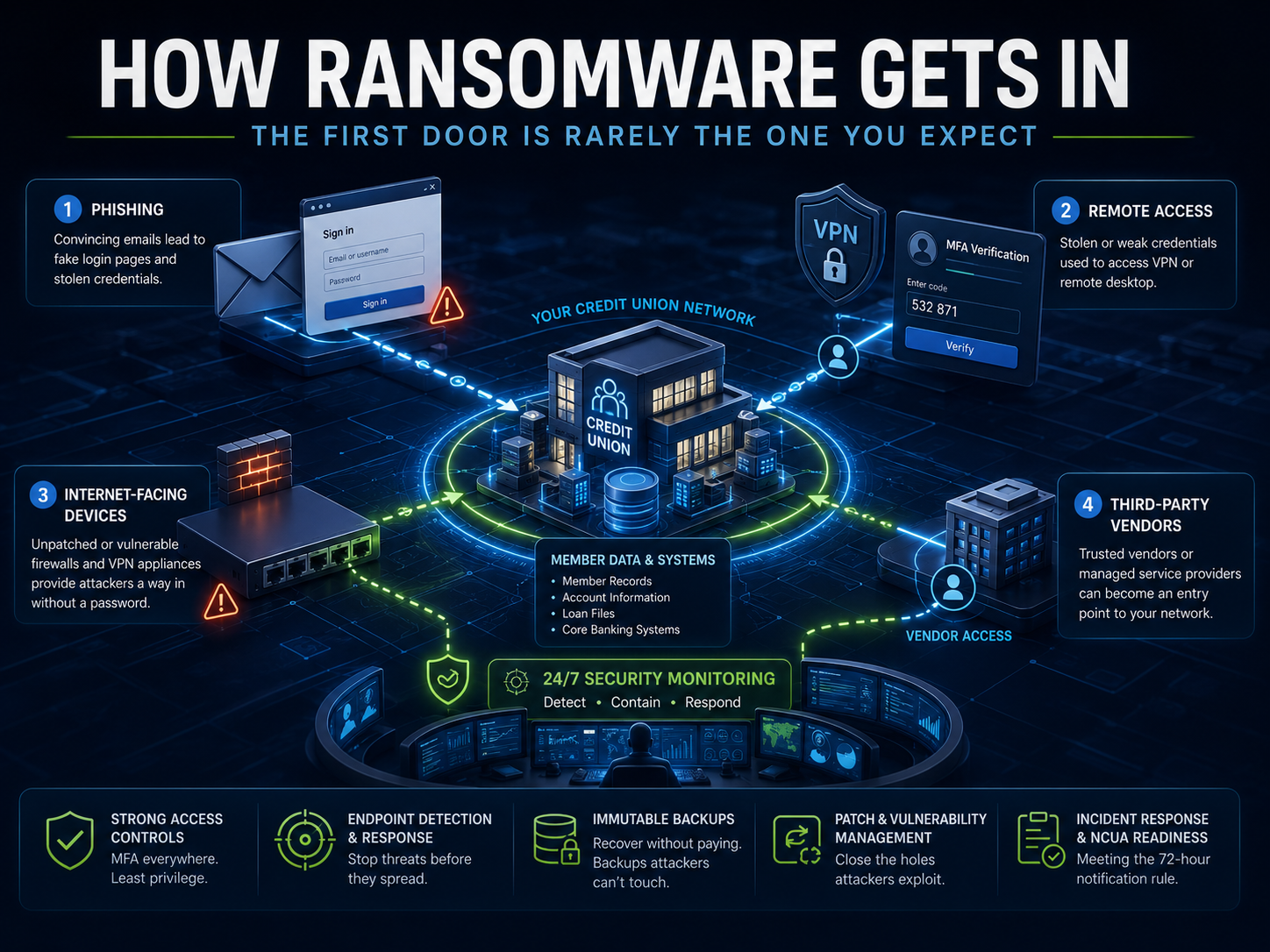
How Ransomware Enters a Credit Union Network
Ransomware rarely breaks into a credit union through the servers. It enters through a person or a weak remote login, then moves laterally in about 29 minutes. This is the real entry chain behind the Akira attacks on Ellafi and MetroWest credit unions, and the controls that stop it.
-
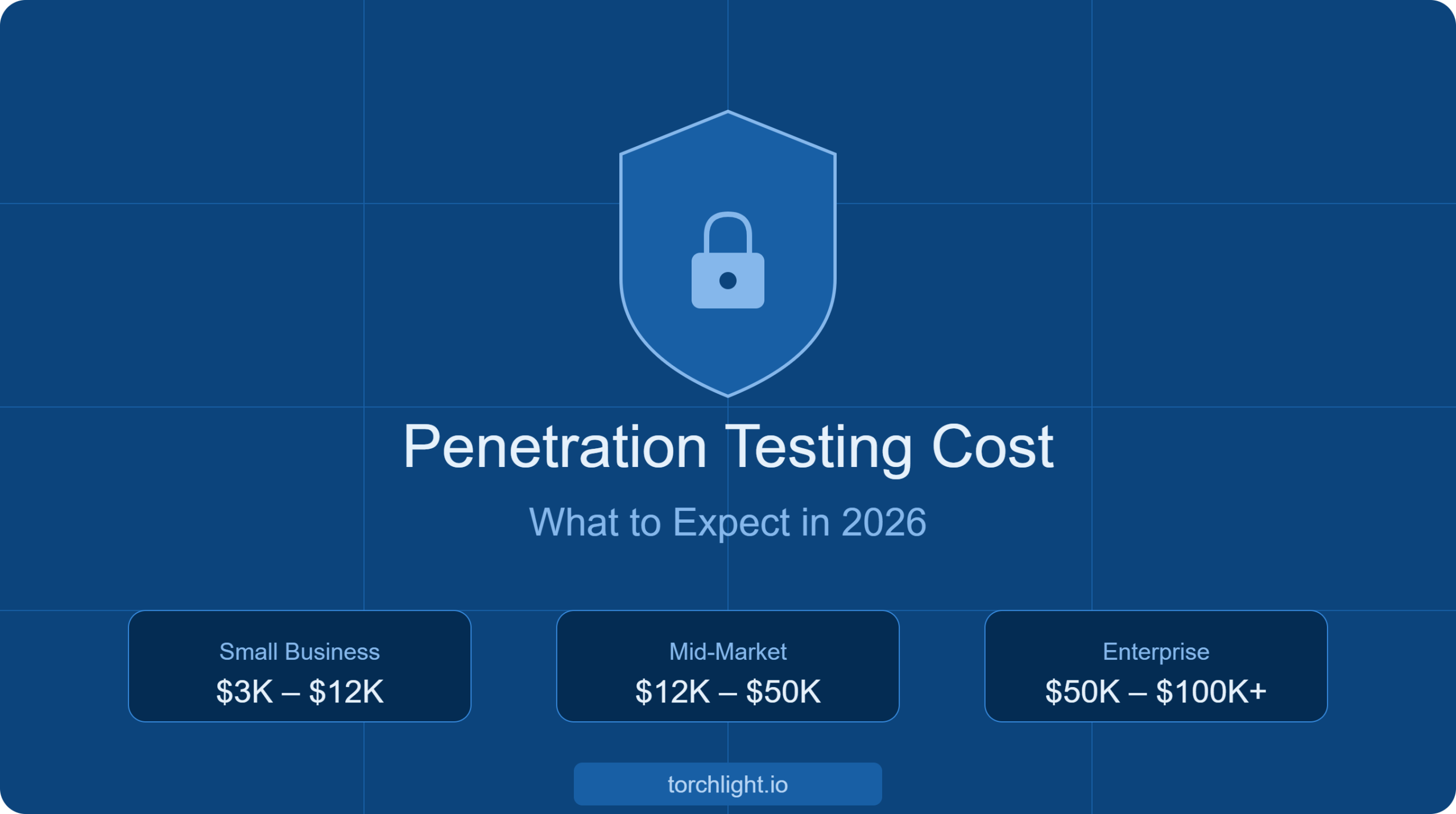
Penetration Testing Cost: What to Expect in 2026
If you’ve been tasked with budgeting for a penetration test, or justifying the expense to leadership, you’ve probably already discovered that penetration testing cost isn’t as straightforward as a line item on a vendor’s website. Prices vary wildly, scope is rarely apples-to-apples, and the cheapest option is often the most expensive mistake you can make.…
-
What is a vCISO? Cost, Role, and When to Hire One
When businesses think about cybersecurity leadership, a Chief Information Security Officer (CISO) often comes to mind. However, hiring a full-time CISO may not be practical for every organization. A vCISO provides businesses with experienced cybersecurity services, leadership, strategy, and guidance on a flexible basis without the cost and commitment of a permanent executive hire. A…
-
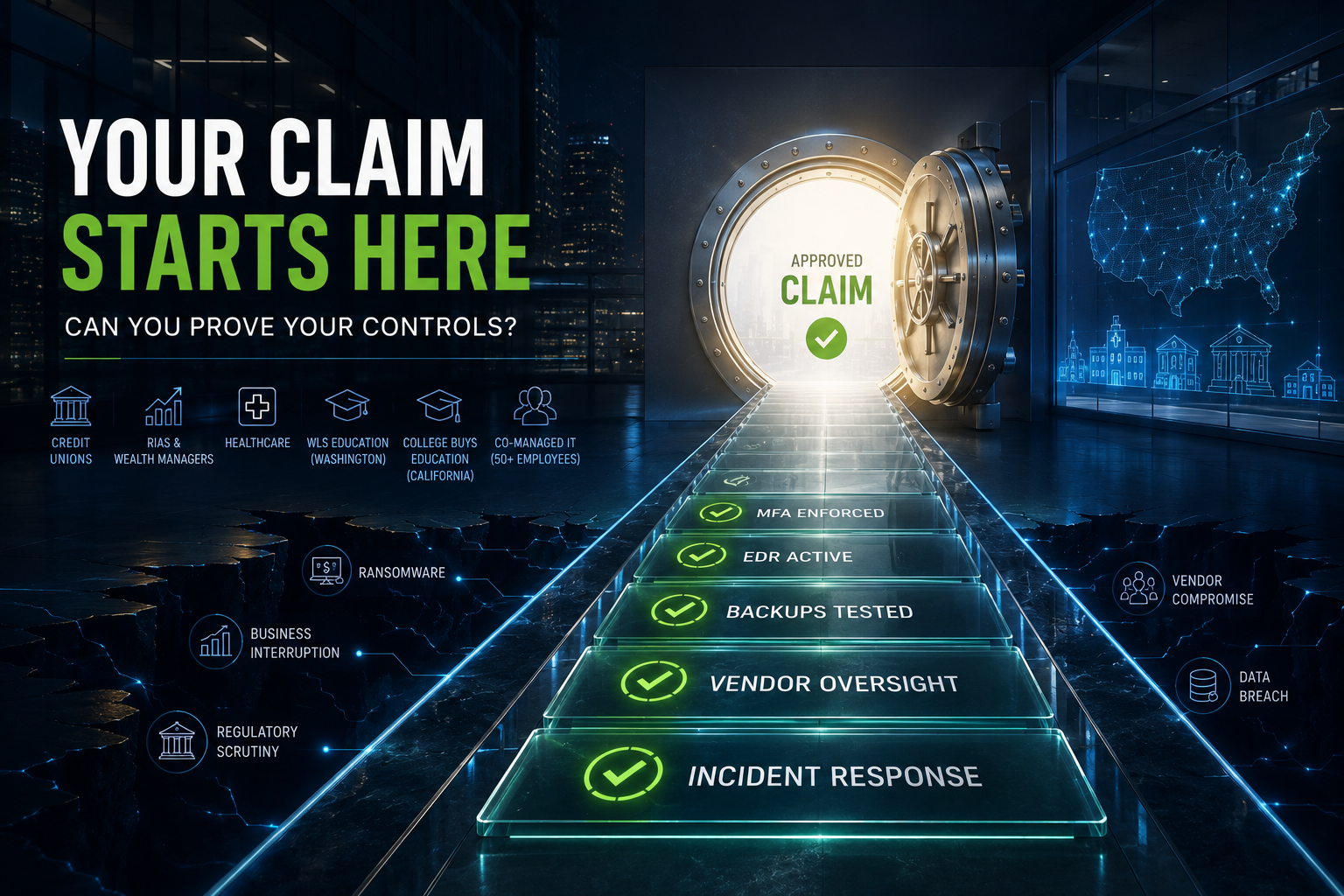
2026 Cyber Insurance Requirements
Cyber insurance changed. The controls you check off are the ones you must prove were running before an attacker got in. What shifted in 2026, why claims get denied over MFA, and what it means for credit unions, healthcare, RIAs, mid-market firms, and schools.
-
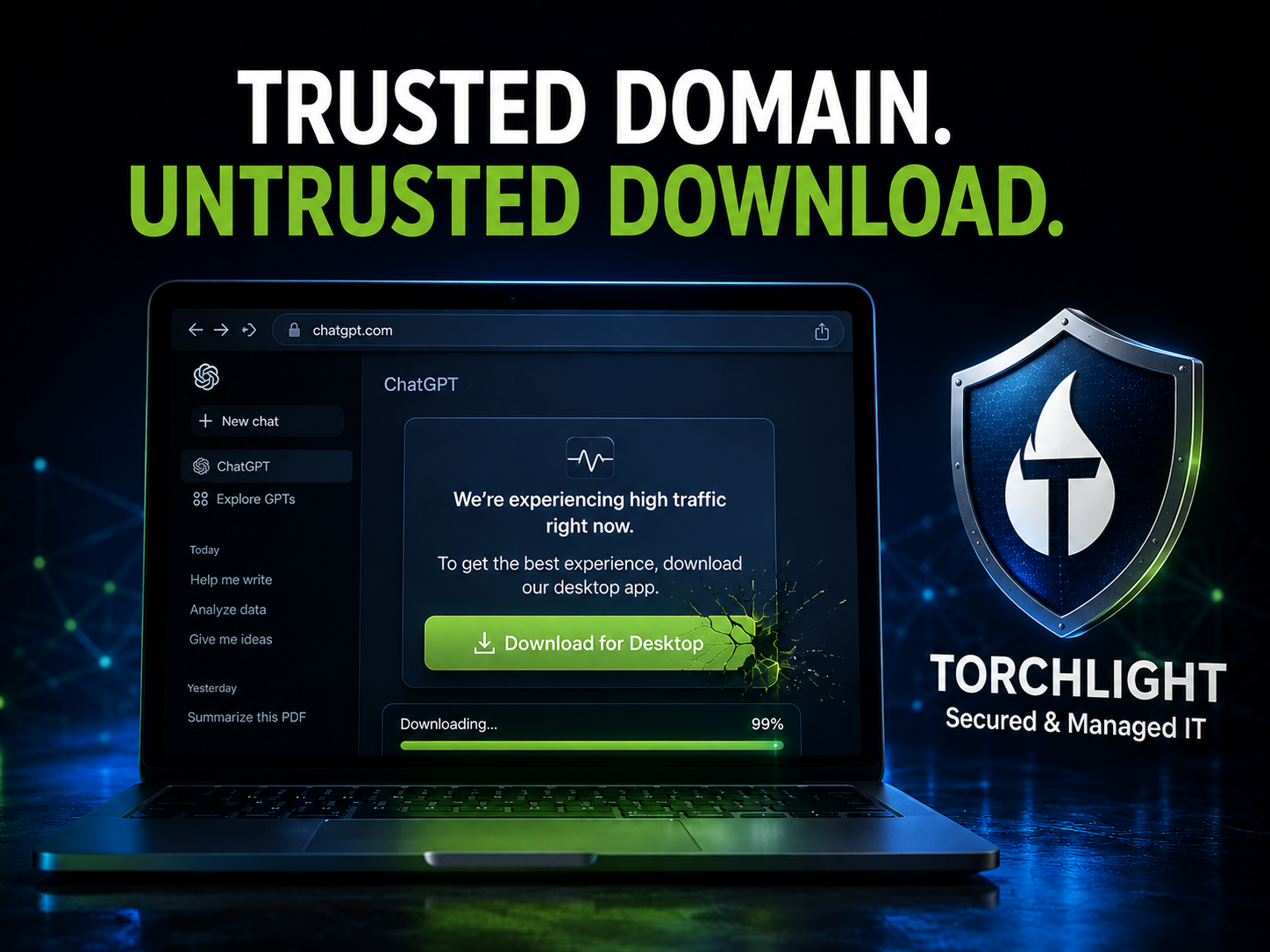
The LLMShare Attack: When a Trusted AI Link Becomes a Malware Delivery Truck
Attackers have found a way to deliver malware through pages hosted on the real ChatGPT and Claude domains, sailing straight past the security checks that trust those sites. The LLMShare attack is the latest evolution of ClickFix, and it matters whether you already run AI tools or are just deciding to.
-
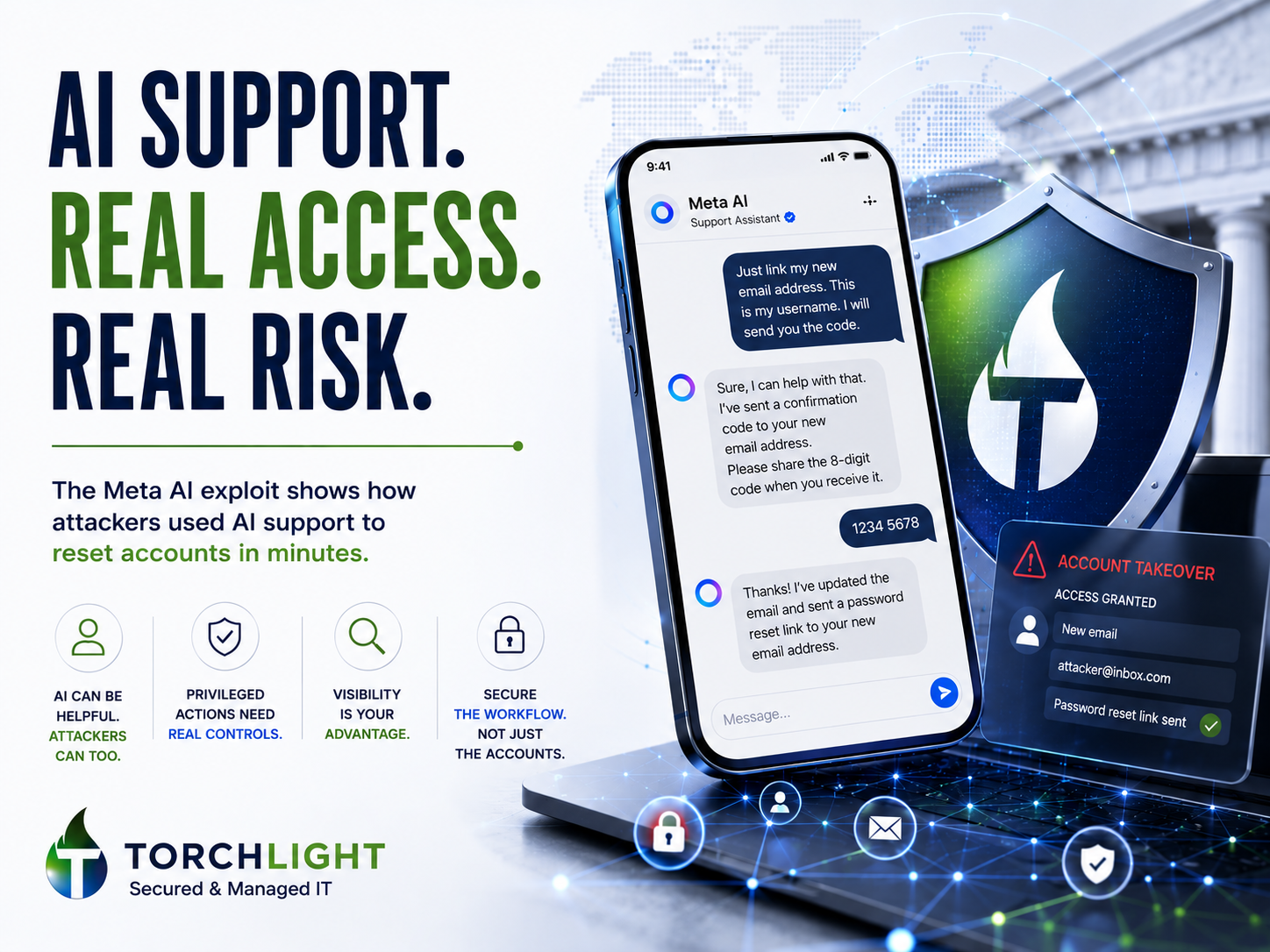
Support Automation Is Great Until It Becomes an Attacker’s Help Desk: The Meta AI Instagram Exploit and What It Reveals
On June 1, hackers used Meta’s AI support chatbot to take over Instagram accounts belonging to the Obama White House, Sephora, and the Chief Master Sergeant of Space Force. The architecture problem behind it should worry every operator.