
When businesses start researching managed IT services, one question usually comes first: “How much should managed IT actually cost?” And honestly, the answers online can feel confusing. One provider may quote a few hundred dollars per month, while another charges thousands for seemingly similar services. Some include cybersecurity, backups, and cloud management in their pricing, while others charge separately for every additional service.
Modern managed IT services are no longer just about fixing technical issues when something breaks. In 2026, businesses will rely heavily on technology for communication, remote work, customer data, compliance, cloud infrastructure, and cybersecurity resilience. This guide will help you understand pricing models, average costs, hidden expenses, and ROI considerations so you can make a smarter and more confident decision when choosing an MSP.
What Are Managed IT Services?
Managed IT services are outsourced technology solutions where a third-party provider manages, monitors, supports, and secures a company’s IT environment. Instead of relying entirely on an internal IT department, businesses partner with a managed service provider (MSP) to handle critical technology operations.
These services often include:
- Help desk support
- Endpoint monitoring
- Cloud management
- Cybersecurity protection
- Data backup and recovery
- Compliance support
- Microsoft 365 management
- Strategic IT consulting
- Network maintenance
- Disaster recovery planning
Modern MSPs have evolved significantly over the past few years. Today’s leading providers combine IT operations with cybersecurity, compliance management, and strategic guidance because businesses need more than reactive support. They need proactive risk reduction.
Why Businesses Are Investing More in Managed IT Services

Technology environments have become increasingly complex. Businesses now operate across:
- Remote work environments
- Hybrid cloud systems
- SaaS platforms
- Mobile devices
- Highly connected networks
At the same time, cyberattacks are increasing in both frequency and sophistication. Cybersecurity Ventures estimates that cybercrime damages could reach $10.5 trillion annually worldwide, making cybersecurity one of the most important operational priorities for modern organizations.
This growing risk landscape is pushing companies toward proactive IT partnerships instead of reactive support models. Businesses are increasingly using managed security services to:
- Reduce downtime
- Improve operational efficiency
- Strengthen cybersecurity posture
- Support compliance
- Gain access to specialized expertise
- Improve long-term scalability
As a result, searches related to managed IT services pricing continue to grow as organizations seek to balance technology investments with business outcomes.
How Managed IT Services Pricing Works
There is no single universal pricing structure in the managed services industry. Most providers customize pricing based on:
- Company size
- Cybersecurity needs
- Compliance requirements
- Infrastructure complexity
- Support expectations
- Service scope
However, there are several common pricing approaches businesses should understand.
1. Per User Pricing
This model charges businesses a fixed monthly fee per employee or end user.
Example:
- 50 employees × monthly per-user rate
This is one of the most common modern MSP pricing models because it creates predictable budgeting and scales easily with company growth.
Services typically include:
- Help desk support
- Endpoint management
- Microsoft 365 administration
- Remote monitoring
- Basic cybersecurity protection
2. Per Device Pricing
Some providers charge based on the number of devices managed. This may include:
- Desktops
- Laptops
- Servers
- Firewalls
- Mobile devices
- Networking equipment
This structure works well for organizations where multiple employees share devices or where infrastructure requirements vary heavily.
3. Tiered Service Packages
Many MSPs offer structured packages such as:
- Basic
- Standard
- Premium
Higher-tier plans often include:
- Advanced cybersecurity
- Compliance support
- Strategic consulting
- 24/7 monitoring,
- Backup management
This allows businesses to align services with operational priorities and growth goals.
4. All-Inclusive Managed Services
This model provides comprehensive IT support for a single predictable monthly fee. Services often include:
- IT management
- Cybersecurity
- Monitoring
- Maintenance
- Strategic guidance
- User support
Although the monthly investment may appear higher initially, all-inclusive services often reduce long-term operational risk and unexpected costs.
Managed IT Services Pricing Models Explained
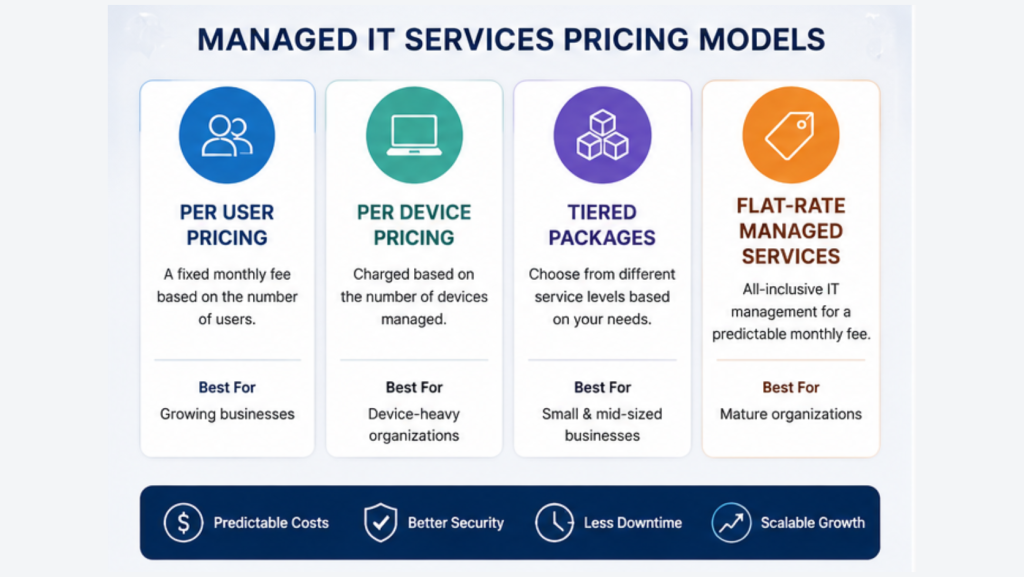
Understanding different managed IT services pricing models is important because the pricing structure directly affects scalability, support quality, budgeting, and long-term ROI.
Here is a simplified comparison:
| Pricing Model | Best For | Main Advantage |
| Per User | Growing businesses | Predictable scaling |
| Per Device | Device-heavy organizations | Flexible infrastructure pricing |
| Tiered Packages | SMBs | Easier service selection |
| Flat-Rate Managed Services | Mature organizations | Predictable budgeting |
| Break/Fix | Reactive small businesses | Lower upfront commitment |
While break/fix support may appear cheaper initially, it often leads to higher long-term costs due to:
- Downtime
- Emergency support
- Inconsistent maintenance
- Cybersecurity vulnerabilities
Proactive managed services are designed to prevent problems before they disrupt operations.
How Much Does Managed IT Services Cost?
One of the most common questions businesses ask is: “How much does managed IT services cost?”
The answer depends on several factors, including:
- Company size
- Industry regulations
- Cybersecurity requirements
- Cloud infrastructure
- Support availability
- Operational complexity
However, average industry pricing in 2026 often falls within these ranges:
| Business Size | Estimated Monthly Cost |
| Small Businesses | $1,000 – $5,000 |
| Mid-Sized Businesses | $5,000 – $20,000 |
| Enterprise Organizations | $20,000+ |
On a per-user basis, many businesses typically pay:
- $100–$300 per user monthly
Organizations operating in regulated industries or requiring advanced cybersecurity services may pay more. This often includes:
- SOC monitoring
- SIEM solutions
- MDR services
- Compliance management
- Penetration testing
- Strategic security consulting.
What Impacts Managed IT Pricing?
Several factors influence overall managed pricing. Understanding these variables helps businesses evaluate quotes more accurately.
1. Company Size & Infrastructure
Larger environments require:
- More monitoring
- Additional support
- More endpoints
- Greater operational management.
Multi-location businesses also typically require more advanced network management.
2. Cybersecurity Requirements
Modern cybersecurity services significantly impact pricing. This may include:
- Endpoint detection and response (EDR)
- SIEM monitoring
- Vulnerability management
- MFA management
- Phishing protection
- SOC operation
However, stronger security often reduces long-term financial risk substantially. According to Sophos, ransomware recovery costs for businesses can reach millions of dollars depending on operational disruption and data recovery complexity.
3. Compliance Requirements
Organizations in industries such as:
- Healthcare
- Finance
- Legal
- Government
Often requires additional compliance support. This may include:
- Audit preparation
- Documentation
- Policy management
- Risk assessments
- Regulatory reporting
4. Cloud Environment Complexity
Hybrid and multi-cloud environments require specialized expertise and monitoring capabilities. The more integrated the infrastructure, the more strategic management is typically required.
5. Support Availability
24/7 support naturally costs more than standard business-hours assistance. Businesses operating across multiple locations or time zones often prioritize continuous support coverage.
Managed IT Services Rates: What Businesses Should Expect
Average managed IT services rates vary significantly depending on service maturity and provider specialization. Typical ranges include:
- Basic IT support: $75–$150 per user monthly
- Security-focused MSPs: $150–$300 per user monthly
- Compliance-heavy environments: $250+ per user monthly
Businesses should avoid comparing providers based only on price. A lower-cost provider may exclude critical services such as:
- Cybersecurity monitoring
- Incident response
- Compliance management
- Strategic consulting
- Backup management
This can lead to higher operational and financial risks later.
The Hidden Costs Businesses Often Overlook
Many companies focus only on monthly fees when evaluating managed IT services pricing. But one of the most common mistakes businesses make is underestimating the hidden costs associated with inadequate IT management. These hidden costs may include:
- Downtime,
- Productivity loss
- Cybersecurity incidents
- Compliance penalties
- Employee frustration
- Emergency recovery expenses
- Reputational damage
For example, a ransomware incident can halt operations for days or even weeks. Even relatively small outages can disrupt workflows, delay customer service, and impact revenue. This is why mature organizations increasingly evaluate IT providers based on:
- Risk reduction
- Operational continuity
- Long-term business value
Managed IT Services ROI Calculator: Why ROI Matters
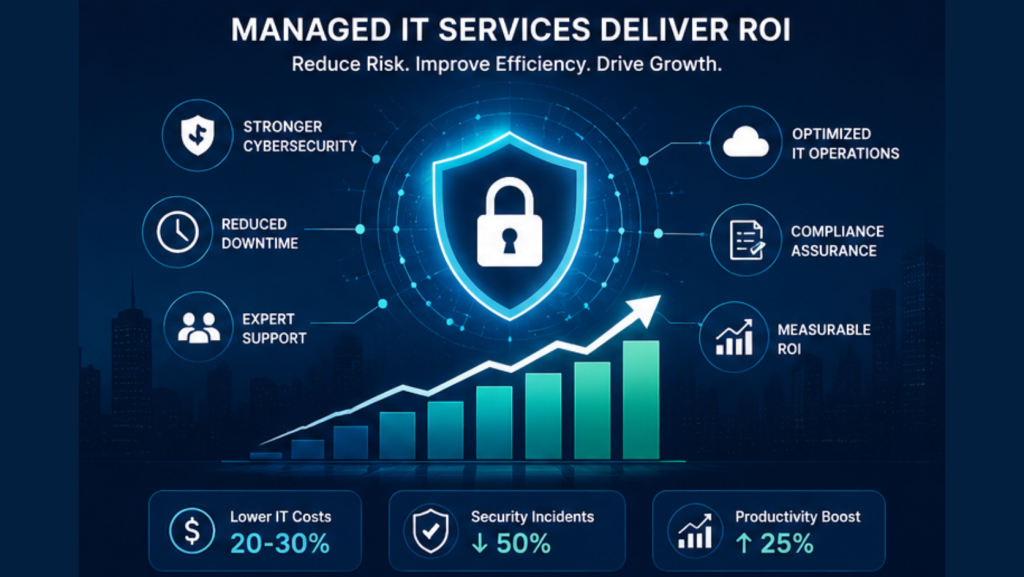
Technology investments should always connect to measurable business outcomes. A strong managed services roi calculator helps businesses evaluate:
- Downtime reduction
- Productivity improvements
- Cybersecurity savings
- Staffing efficiencies
- Operational scalability
Modern organizations no longer view managed services as simply an IT expense. Instead, they increasingly treat managed services as:
- Operational investments
- Cybersecurity safeguards
- Long-term business continuity solutions
How to Calculate Managed IT Services ROI
A practical managed services calculator should include:
1. Downtime Reduction
Downtime directly impacts:
- Productivity
- Customer service
- Internal workflows
- Revenue
Reducing outages often produces immediate operational value.
2. Cybersecurity Risk Reduction
Preventing even a single security incident can save organizations substantial financial losses. This includes:
- Recovery costs
- Legal expenses
- Operational disruption
- Insurance impacts
- Reputational damage
3. Reduced Internal Hiring Costs
Recruiting and retaining experienced IT professionals continues to become more expensive. Managed services provide access to:
- Specialized expertise
- Advanced security tools
- Strategic guidance
Without the overhead of building a large internal team.
4. Productivity Improvements
Faster issue resolution and proactive maintenance help employees work more efficiently with fewer interruptions.
Why Businesses Use a Managed IT Pricing Calculator
A Managed IT pricing calculator helps organizations estimate realistic budgets before selecting an MSP. It also allows businesses to:
- Compare pricing models
- Forecast future growth costs
- Evaluate service inclusions
- Align IT spending with operational goals
More importantly, it improves transparency during the buying process.
Guide to Managed IT Services Pricing: Questions Every Business Should Ask
This guide to managed IT services pricing would not be complete without discussing provider evaluation. Choosing the right MSP requires more than comparing monthly quotes. Businesses should ask strategic questions before making a decision.
What Is Included in the Monthly Fee?
Clarify whether pricing includes:
- Cybersecurity
- Backups
- Microsoft 365 management
- Compliance support
- Cloud services
- After-hours support
Are There Additional Charges?
Some providers charge separately for:
- Onsite visits
- Emergency support
- Project work
- Licensing
- Advanced security services
Transparency is critical.
What Cybersecurity Protections Are Included?
Cybersecurity should be a core component of modern managed services. Businesses should understand:
- Monitoring capabilities
- Threat detection processes
- Incident response procedures
- Endpoint protection coverage
Does the Provider Support Compliance?
Organizations operating in regulated industries should ensure the provider understands:
- Audit requirements
- Documentation standards
- Risk management processes
Is Strategic IT Guidance Included?
The best MSPs act as long-term technology partners. Strategic planning and business alignment are increasingly important for growth-focused organizations.
Managed IT Costs vs. In-House IT Teams
Comparing managed costs to internal staffing often reveals substantial long-term savings. Building an internal IT department may require:
- Salaries
- Benefits
- Certifications
- Training
- Security tools
- Software licensing
- Infrastructure investments
Managed services provide access to broader expertise and enterprise-level tooling without maintaining a large in-house team. This is especially valuable for:
- Small businesses
- Mid-sized organizations
- Compliance-heavy industries
Managed IT Services Price List: What Is Usually Included?
A typical managed services price list may include:
| Service | Commonly Included |
| Help Desk Support | Yes |
| Endpoint Monitoring | Yes |
| Microsoft 365 Management | Yes |
| Backup & Disaster Recovery | Often |
| Cybersecurity Monitoring | Often |
| Compliance Support | Sometimes |
| vCISO Services | Premium Tier |
| Penetration Testing | Usually Add-On |
Always confirm service inclusions because provider offerings vary significantly.
Pricing for Managed IT Services Should Focus on Value, Not Just Cost
When evaluating pricing for managed IT services, businesses should focus on operational outcomes instead of simply choosing the lowest monthly quote. The right provider should help organizations:
- Reduce operational risk
- Improve security posture
- Increase efficiency
- Support compliance
- Scale more confidently
The cheapest provider is rarely the most cost-effective long-term solution. Organizations that prioritize proactive support and cybersecurity maturity often experience:
- Fewer disruptions
- Stronger resilience
- More predictable operations
Why Security-First MSPs Are Becoming More Valuable
Cybersecurity is no longer separate from IT operations. Businesses today require providers that combine:
- Managed IT
- Cybersecurity
- Compliance
- Strategic consulting
This integrated approach improves:
- Operational visibility
- Resilience
- Compliance readiness
- Executive confidence
Security-first MSPs help businesses proactively identify and reduce risks before they become major operational problems. For organizations operating in regulated industries, this level of strategic support is becoming increasingly important.
Final Thoughts
Understanding managed IT services pricing is not just about monthly costs. The right partner helps reduce downtime, strengthen security, support compliance, and improve efficiency. As technology becomes more complex, businesses need proactive support that delivers long-term value, not just reactive fixes.
For a security-first approach, TorchLight combines IT, cybersecurity, and compliance into one streamlined model. The goal is not just outsourcing IT, but building a more resilient, future-ready business. If you are reassessing your IT strategy, it may be worth exploring a more proactive partner. Contact us today.
FAQs
1. What is the average managed IT services pricing in 2026?
Most businesses typically pay between $100–$300 per user monthly, depending on cybersecurity requirements, support coverage, compliance needs, and infrastructure complexity.
2. What affects managed IT services pricing the most?
The biggest pricing factors include company size, cybersecurity services, compliance requirements, cloud complexity, support availability, and the overall service scope.
3. Are managed IT services worth the investment?
Yes. Managed services often reduce downtime, improve operational efficiency, strengthen cybersecurity, and provide predictable technology costs for businesses.
4. What is included in managed IT services?
Most managed IT services include help desk support, monitoring, cybersecurity protection, cloud management, backup solutions, Microsoft 365 management, and strategic IT guidance.
5. How do businesses calculate ROI from managed IT services?
Businesses typically calculate ROI by evaluating downtime reduction, productivity improvements, reduced cybersecurity risk, operational efficiency, and savings from avoiding large in-house IT staffing costs.