
Continuous Vulnerability Monitoring
Always-on visibility into your security posture, not just an annual snapshot.
Your Pen Test Shows Vulnerabilities Today. What About Tomorrow?
Penetration testing gives you a point-in-time assessment. But threats don’t wait for your next annual test.
New vulnerabilities are discovered daily. Configurations drift. Systems get added. Patches get missed.
Between pen tests, you’re flying blind.
The Solution: Continuous Vulnerability Monitoring from TorchLight
Cloud-based monitoring across all your connected endpoints. Get continuous security monitoring with regular reporting on discovered vulnerabilities, configuration issues, and risk-based prioritization.
Your always-on security radar between pen tests.
What You Get
Continuous Vulnerability Assessment
Automated scanning to identify security weaknesses as they emerge.
Configuration Monitoring
Track configuration drift and misconfigurations that create security gaps.
Risk-Based Prioritization
We prioritize based on criticality and your specific environment.
Regular Reporting
Vulnerability reports on your designated schedule with criticality ratings and clear remediation guidance.
Ideal for organizations that:
✓ Conduct annual or quarterly pen testing but need visibility between tests
✓ Need continuous monitoring for compliance or insurance requirements
✓ Want to identify and remediate vulnerabilities proactively
✓ Need ongoing security posture assessment alongside threat monitoring


Why TorchLight
Real People Who Care – Context, guidance, and support, not just automated reports
Security Expertise – Certified professionals (CISSP, OSCP, PCIP) who understand what matters
Compliance-Ready – Reports designed to support audit, insurance, and regulatory requirements
Proactive Protection – Find and fix vulnerabilities before attackers exploit them
Ready To Add Continuous Vulnerability Monitoring?
Latest Insights & Blog
Expert insights on cybersecurity, compliance, and IT strategy.
-
Canvas Breach Update: Reports Set to Resume for California’s 116 Community Colleges
The April-May 2026 Canvas breach put student data at all 116 California community colleges in scope. Instructure paused detailed breach reports over a ShareFile threat that has since cleared. Here’s what was exposed, what California’s breach-notification law actually requires, and the four steps to take this week.
-
How the SharePoint Chain Broke on July 14, 2026: CVE-2026-56164, End-of-Support, and What Every On-Prem Operator Should Do This Week
On July 14, 2026, Microsoft patched an actively exploited SharePoint zero-day (CVE-2026-56164), CISA added it to the Known Exploited Vulnerabilities catalog with a 72-hour federal deadline, and support for SharePoint Server 2016 and 2019 officially ended. Three events, one date. Here is what every on-premises operator should do this week.
-
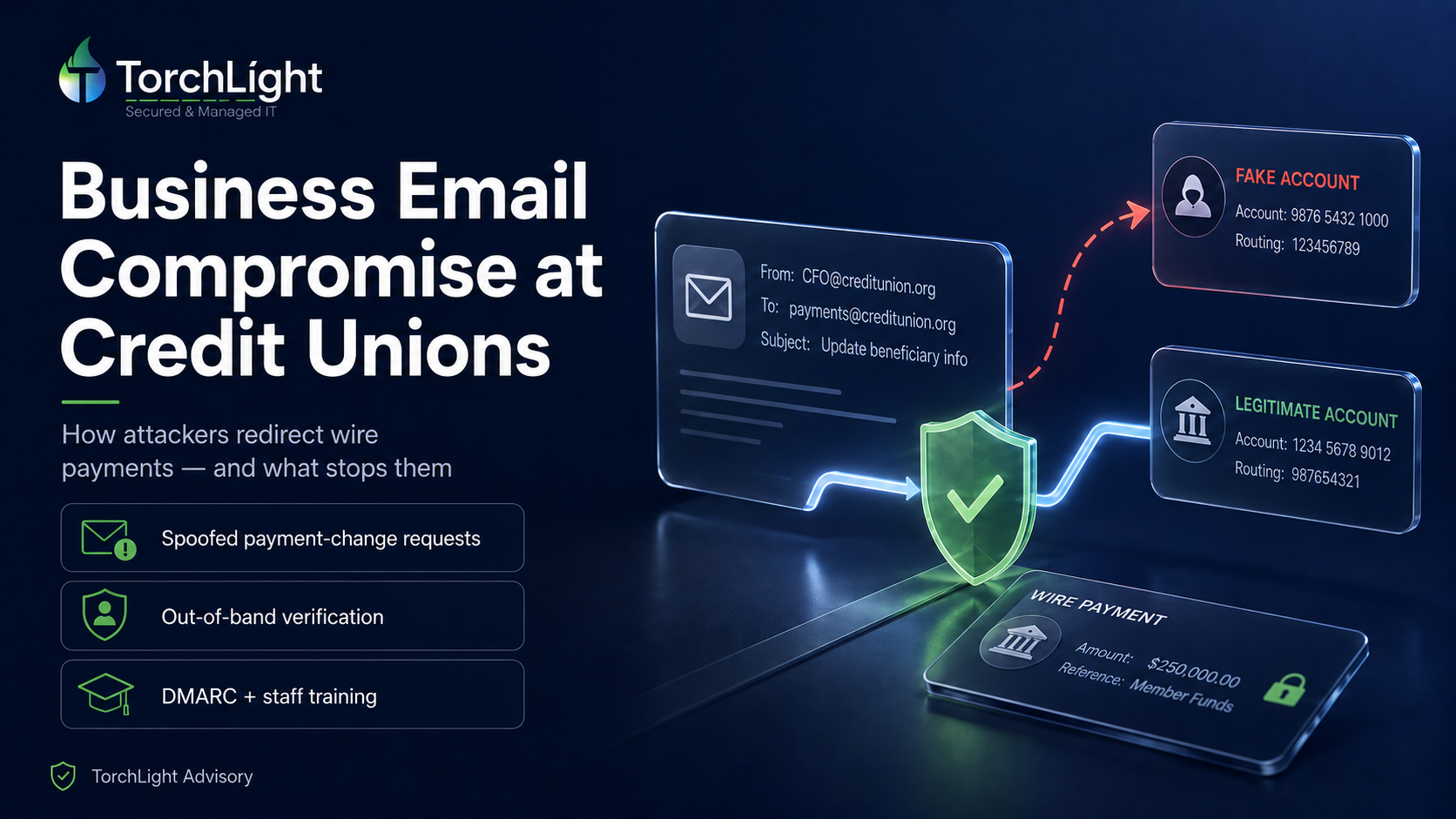
Business Email Compromise at Credit Unions: How Attackers Redirect Wire Payments and What Stops Them
Business email compromise costs U.S. organizations billions each year, and credit unions are prime targets. Here is how attackers redirect wire and ACH payments, the four most common scenarios, and the layered controls (DMARC, out-of-band verification, and staff training) that actually stop them.
-
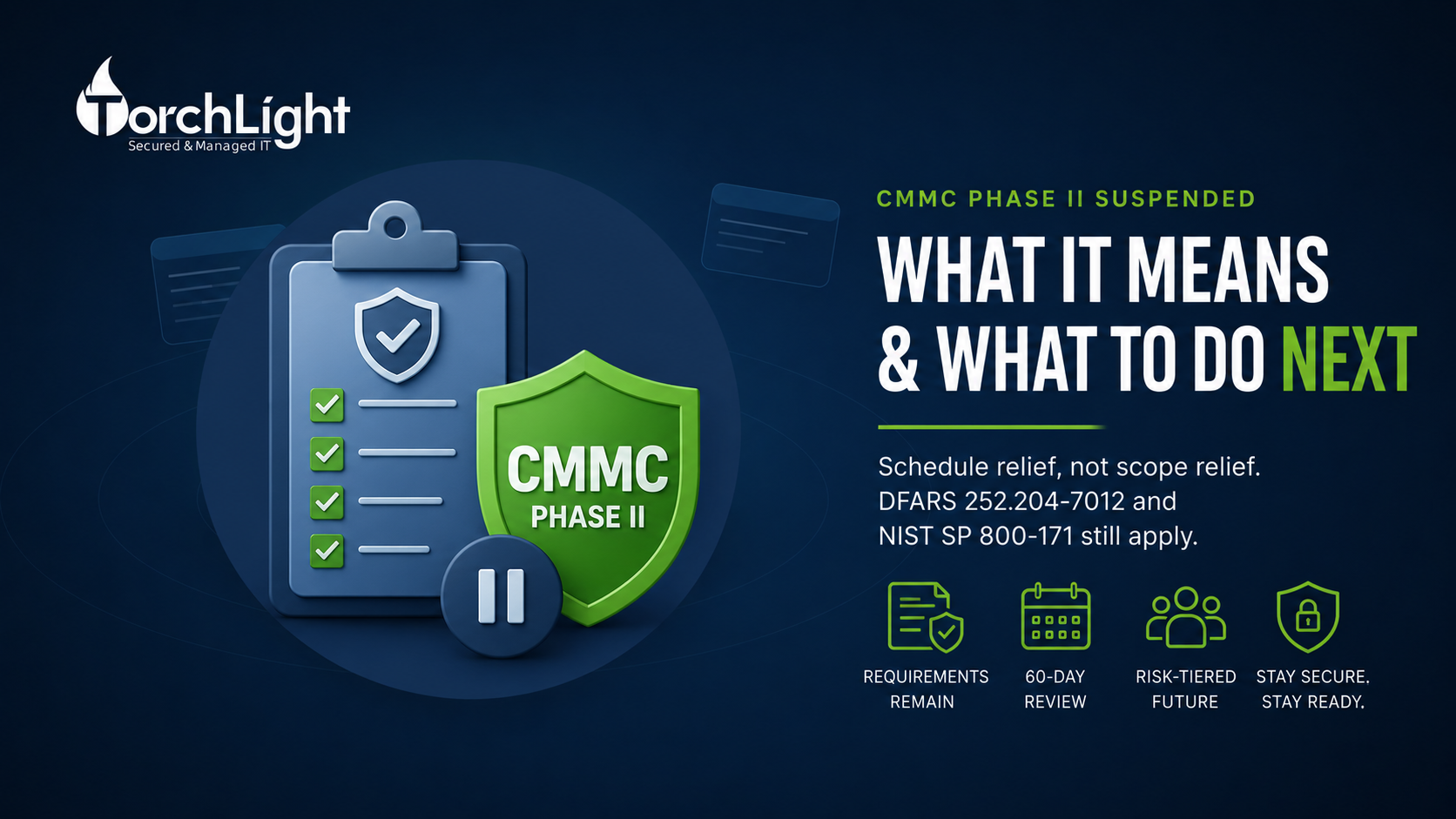
CMMC Phase II Suspended: What It Means and What to Do Next
On July 13, 2026, the Department of War suspended CMMC Phase II, removing the November 2026 third-party audit deadline. But DFARS 252.204-7012, NIST SP 800-171, and your SPRS self-attestation all still apply. This is schedule relief, not scope relief, and here is what defense contractors should do during the pause.
-
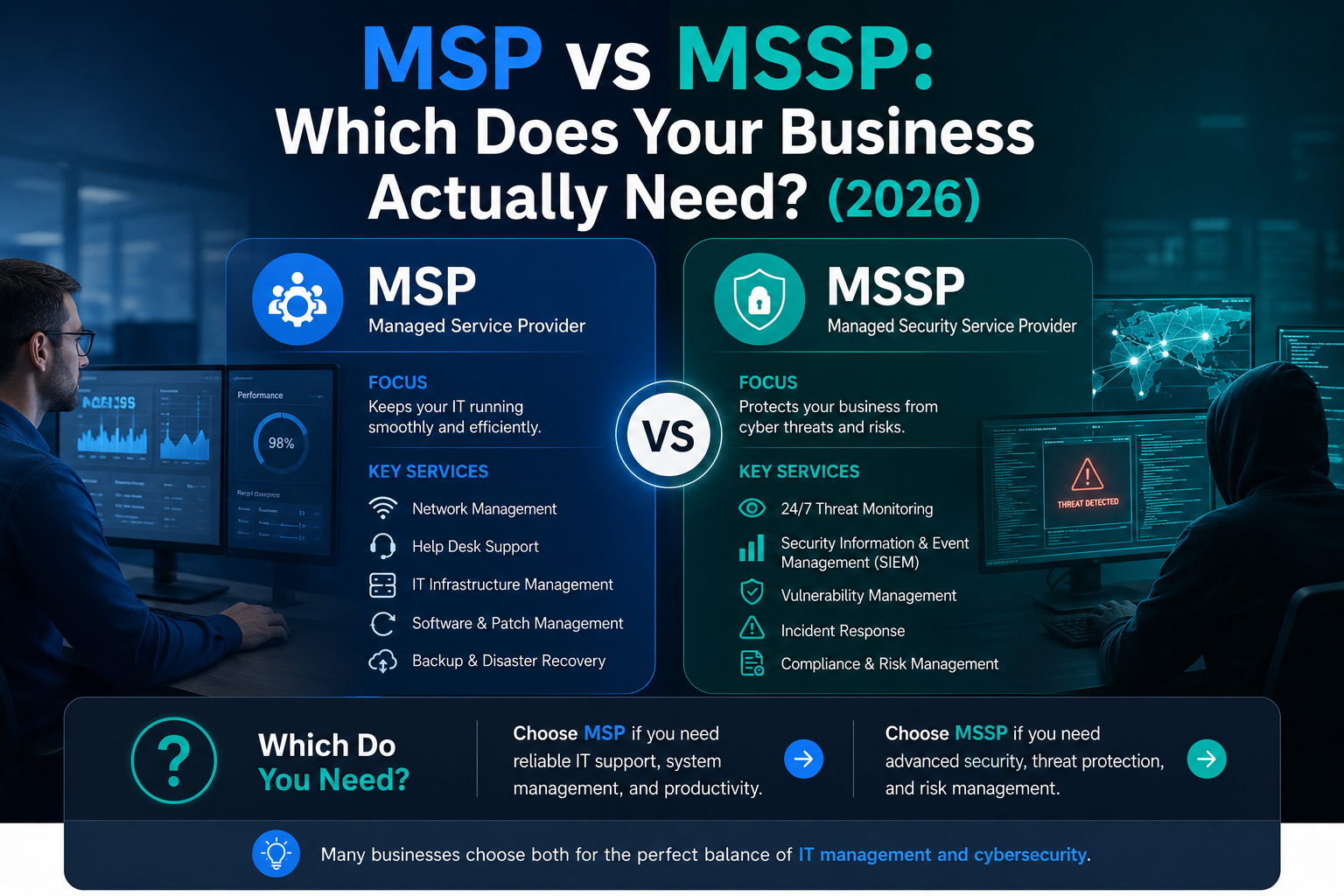
MSP vs MSSP: Which Does Your Business Actually Need? (2026)
Choosing between an MSP and an MSSP is becoming increasingly difficult as cyber threats grow more sophisticated and compliance requirements become more demanding. Many businesses invest in outsourced IT services expecting comprehensive protection, only to discover later that traditional IT support doesn’t necessarily include proactive cybersecurity. If you’re comparing MSP vs MSSP, understanding the difference…
-
What Is a Fractional vCISO? And Does a Credit Union Under $500M Actually Need One?
A fractional vCISO gives credit unions under $500 million the strategic security leadership of a full-time CISO, part-time and at a fraction of the cost. Here is what a vCISO actually does, how it differs from a vCIO, what NCUA examiners expect, what engagements cost, and how to tell if your credit union needs one.
-
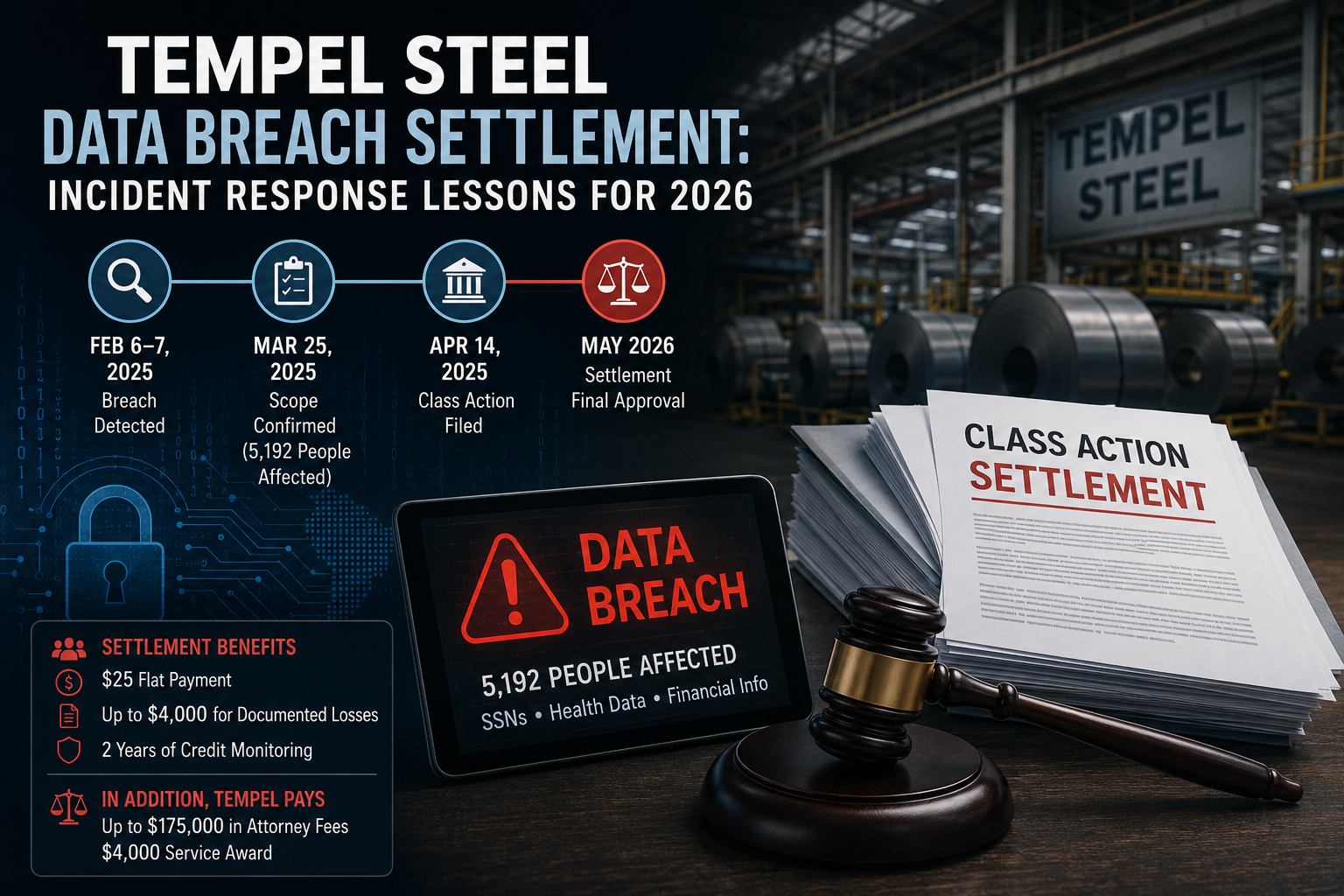
Tempel Steel Data Breach Settlement: Incident Response Lessons for 2026
Tempel Steel confirmed its breach on March 25, 2025. Twenty days later it was named in a class action, and by 2026 it faced up to $175,000 in fees plus multi-year liability, for just 5,192 employee records. Here’s what the settlement teaches financial, healthcare, and education IT leaders about response timelines.
-
The Biggest 4th of July Breach in History & the Real Cybersecurity Lessons Behind It
The biggest 4th of July breach in history took out an entire invading fleet with a single upload. The twist is that it happened in the 1996 movie Independence Day. The aliens still lost for real reasons though: no network segmentation, blind trust, and an unsigned payload. Those are the lessons worth bringing to your…
-
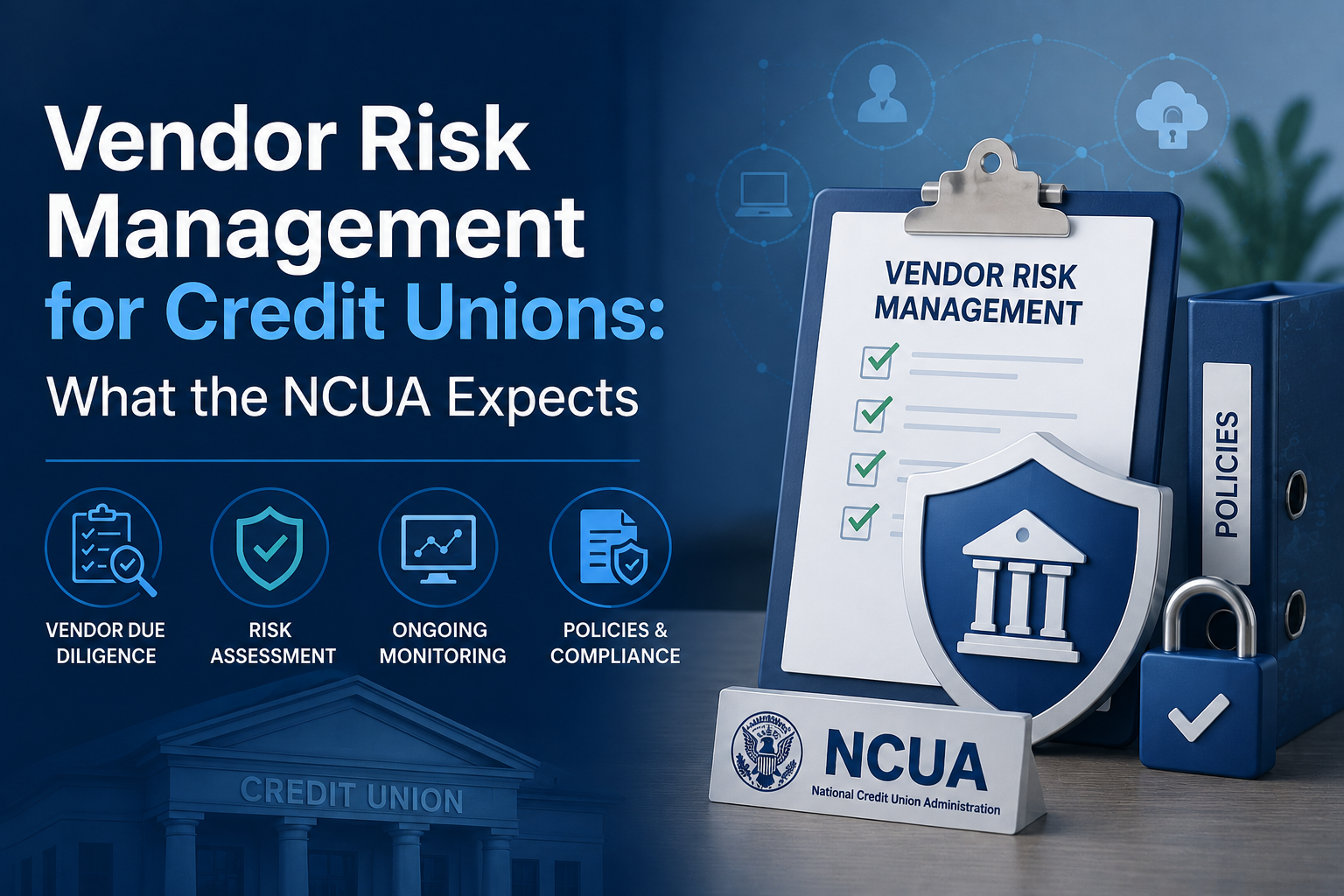
Vendor Risk Management for Credit Unions: What the NCUA Expects
Credit unions rely on third-party vendors for services such as digital banking, cloud platforms, payment processing, and fintech solutions. While these partnerships improve efficiency and member experiences, they also introduce cybersecurity, compliance, operational, and reputational risks that require careful oversight. As a result, vendor risk management for credit unions remains a key focus during NCUA…
-

FortiBleed: 73,000 Fortinet Firewalls Exposed, and What Every Organization Must Do Now
FortiBleed is one of the largest firewall credential leaks ever found: working VPN logins for 73,932 Fortinet firewalls across 21,600 organizations and 194 countries. Strong passwords did not stop it. See what the leak means for your sector and the steps to take in the next 24 hours.